

Ten teams of Stony Brook faculty receive funds to innovate in AI, develop datasets and benchmarks, and advance research that diffuses AI into novel industrial, societal, and scholarly domains.
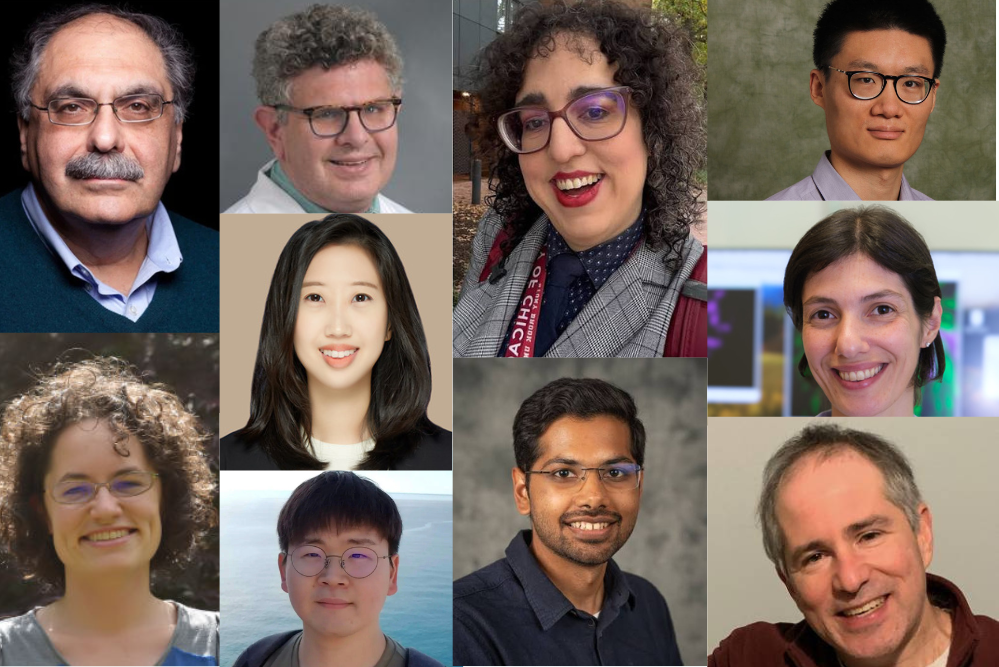
Stony Brook, NY, Aug 10, 2026 - Ten interdisciplinary projects receive funds from Stony Brook University’s AI Small Grant Program.
Selected from a pool of 63 applications, these research initiatives will advance integrated AI innovation and strategic diffusion of AI technology across Stony Brook’s campus, New York State, and the world.
Lav Varshney, Della Pietra Infinity Professor and inaugural director of the AI Innovation Institute, said, “It is important to integrate the advances we make in foundational AI technology with its use in important settings like the treatment of epilepsy and finding early biomarkers for mental health disorders. The selected projects are very much pioneering in this way, sitting at the hard intersection of innovation and diffusion. Some projects are further developing datasets and benchmark tasks that can drive whole ecosystems of research effort towards societally important problems. I’m also super excited by projects that are leveraging AI to drive novel sensing of biological, quantum, and cosmological phenomena and delving into the deep history of mammalian evolution.”
Launched in February 2026, the AI3 Small Grant Program was developed and funded by the AI Innovation Institute (AI3). The Office for Research and Innovation supported the application process and oversaw the committee that reviewed and selected winning proposals.
The grant sought projects in AI, its applications, and its ecosystems, along three distinct tracks. Projects selected for ‘Innovation in AI’ focus on new advances in algorithms, architectures, mathematical foundations, physical foundations, or ethical foundations of AI. Those aimed at ‘Diffusion of AI’ conduct research that facilitates the diffusion of AI into an industrial, societal, or scholarly sector, largely focused on using AI in novel settings.
Projects in the third category seek to develop ‘Datasets and Benchmark Tasks’ appropriate for advancing AI and for respecting their disciplinary core, whether that’s business, engineering, health sciences, humanities, journalism, marine sciences, physical sciences, social sciences, or other fields.
The grant distributed over $450,000 across the ten projects. AI3 will also connect researchers with graduate consultants and experts at the Stony Brook Libraries to help them better execute their projects.
The winning proposals are:
- A Curiosity-Driven Autonomous Microscope
Principal Investigator:
Lina Carlini, assistant professor in the Department of Biochemistry and Cell Biology in the College of Arts and Sciences (CAS)
Co-Principal Investigators:
Tengfei Ma, assistant professor in the Department of Biomedical Informatics in the Renaissance School of Medicine (RSoM) and College of Engineering and Applied Sciences (CEAS)
Zhaozheng Yin, SUNY Empire Innovation associate professor, Department of Biomedical Informatics, Department of Computer Science, and Department of Applied Mathematics & Statistics, RSoM and CEAS
The Project:
Living systems are shaped by brief, unpredictable events — a molecule binding momentarily, or a cell failing to divide correctly. Optical microscopy can resolve them, but microscopes image only the regions an operator selects in advance, guided by a hypothesis set before the experiment begins. Anything outside that expectation goes unrecorded, and it is often precisely these irregularities that signal new biology.
This project will develop a curiosity-driven autonomous microscope that pursues a planned line of enquiry while reasoning about what it observes. Combining real-time cell tracking with causality-aware anomaly detection, the platform will use agentic AI to identify unusual events, anticipate how they unfold, and reconfigure its own imaging to capture them. The aim is a microscope that acts as an active observer, resolving the exceptions that drive biological complexity.
- Quantum Sensing Neural Network: A New Paradigm for AI-Integrated Physical Intelligence
Principal Investigator:
Hyeongrak Choi, assistant professor in the Department of Electrical & Computer Engineering, CEAS
The Project:
Quantum sensing uses superposition and entanglement to measure time, magnetic fields, and gravity with extreme precision. In practice, however, performance is held back by calibration errors and processing pipelines assembled from separate, independently tuned components. As these systems grow more complex, designing and adjusting each stage manually becomes increasingly inefficient and falls short of what the hardware could deliver.
This project will develop the Quantum Sensing Neural Network, an AI-native framework that treats the whole sensing chain — quantum state preparation, measurement scheduling, analogue feature extraction and digital inference — as a single trainable system. Using physics models and reinforcement learning, the framework will optimize every stage under real-world constraints.
- Regression-Gated Continual Alignment of Tool-Using LLM Agents
Principal Investigator:
Jian Li, associate professor in the Department of Computer Science, CEAS
The Project:
Large language models behind AI services and agents are updated frequently to meet shifting user needs, new safety policies, and revised software interfaces. Each update carries a risk: improving one behaviour can break another that worked before, so an assistant might begin failing a safety check it once passed. Current alignment methods offer no guarantee against these regressions, thus eroding trust.
This project will develop Regression-Gated Continual Alignment, which reframes alignment as continual learning under constraint. The framework limits how much a model may change at once and applies explicit regression gates — a compact suite of safety, policy, and tool-validity tests an update must pass before release. Deliverables include formal metrics for regression risk, updated algorithms with mathematical guarantees, and a working prototype.
- Seeding The AI3-YITP Fellowship: Advancing AI at the Frontier of Fundamental Physics
Principal Investigator:
Vivian Miranda, assistant professor in the Department of Physics and Astronomy, CAS
The Project:
Dark energy, the unexplained component driving the accelerating expansion of the universe, is one of the deepest problems in modern physics. NASA's Roman Space Telescope, launching in late 2026, will map hundreds of millions of galaxies with unprecedented precision. Extracting cosmological answers from that data will impose a workload that exceeds even the most powerful supercomputers.
This project will extend AI emulators — neural networks that reproduce these calculations thousands of times faster — in three directions: transfer learning to adapt trained models to new physics using far less data; multi-head attention to separate high-dimensional outputs into physically meaningful parts; and recurrent memory to exploit sequential structure in statistical sampling. The methods used may transfer to any field reliant on costly simulation.
- Applying machine vision AI approaches for unbiased identification of behavioral trajectories in a social conflict model
Principal Investigator:
Grigori Enikolopov, professor in the Department of Anesthesiology, RSoM
The Project:
Social conflict serves an adaptive purpose in social animals, driving the formation of stable hierarchies. The team's recent work with a mouse model linked each of more than twenty behavioural states to a signature pattern of whole-brain activity. These states emerge only gradually, and so the earliest processes that set animals on divergent paths remain unknown. Conventional scoring methods force interactions into predefined categories, making them poorly suited to such subtle dynamics.
This project will apply dense optical flow — a computer vision method that measures motion pixel by pixel across the whole arena, without tracking predefined anatomical landmarks — to an existing library of high-resolution recordings paired with brain-wide activity data. ML models will be trained to predict eventual dominance from early movement alone, with the predictive features mapped onto known behaviors to generate testable hypotheses.
- Leveraging AI for High-Throughput Zebrafish Neurobehavioral Analysis
Principal Investigator:
Howard Sirotkin, associate professor in the Department of Biology, CAS
The Project:
Behavioral assays are the main identifiers of brain function in research on epilepsy, autism, and in assessing the risks posed by PFAS "forever chemicals." Zebrafish are a well-established model for these risks. A newly acquired video system now captures behaviour in far greater dimensionality than classical analysis can handle, and without ML expertise in the group, important structure in these recordings is likely being missed.
This project will build ML pipelines that break continuous zebrafish movement into discrete behavioural motifs, classifying familiar actions such as routine turns and escapes alongside disease-relevant ones (such as seizure phases), while using unsupervised learning to surface states not yet recognised. The pipelines will then be validated across genetic disease and pollutant exposure models, testing whether AI can help distinguish genotypes and exposures invisible to current methods.
- Solving placental mammalian origins and other evolutionary problems with a computer vision model of bio-inspired segmentation
Principal Investigator:
Natasha Vitek, assistant professor in the Department of Ecology and Evolution, CAS
The Project:
Within ten million years of the asteroid impact that ended the dinosaurs, placental mammals diversified rapidly. Genomic evidence indicates that the ancestors of today's bats, whales, hypercarnivores and fruit specialists were already present in that window. Yet they cannot be picked among the thousands of near-identical variations on a single molar tooth form that make up most of the fossil record.
This project will build a pipeline in which an AI model segments a large collection of mammalian molar images, feeding a tool that automatically quantifies tooth traits drawn from decades of qualitative biological study. Validation will span both extremes of evolutionary scale: detecting evolutionary signals within single species, and reconstructing deep relationships among long-disputed mammal groups, opening the mammalian tree of life to significantly faster analysis.
- A Convolutional Neural Network Framework for Enhancing Epilepsy Surgery Outcomes via Neurophysiological Biomarkers of Epileptogenic Brain
Principal Investigator:
Shennan Weiss, clinical assistant professor in the Department of Neurology, RSoM
The Project:
Surgery is often effective for the roughly thirty percent of epilepsy patients whose seizures resist medication, but as many as half of those operated on continue to experience seizures. Planning for surgeries currently rests on multidisciplinary clinical consensus, which cannot reliably identify which operations are likely to fail.
Weiss’s preliminary work tested a three-branch convolutional neural network combining pathological high-frequency oscillations in brain signals, neuroanatomy, and the planned surgical boundaries. It identified seizure-free patients with 92% accuracy, with fast ripple oscillations proving especially informative. The next steps of this project include validation on fully independent patient groups, analysis by subgroup, and using the model to trial virtual amendments to failed surgeries — work that could support a future clinical trial.
- Towards Automated Non-invasive Consciousness Monitoring for Neurocritical Care
Principal Investigator:
Akshat Dave, assistant professor in the Department of Computer Science, CEAS
Co-Principal Investigator:
Ulas Sunar, SUNY Empire Innovation professor in the Department of Biomedical Engineering, CEAS
The Project:
After traumatic brain injury, around 40% of patients diagnosed vegetative are, in fact, conscious — a condition invisible to behavioural assessment. The standard assessment occupies a trained examiner only for up to half an hour, capturing a snapshot and unable to detect hidden awareness. Such misdiagnosis can lead to life support being withdrawn prematurely, making objective monitoring an urgent unmet need.
This project will combine EEG with diffuse correlation spectroscopy which uses near-infrared light to measure deep cerebral blood flow, continuously recording brain-injured intensive care patients across five states of consciousness. An AI model will fuse these streams across timescales from milliseconds to days. All data, code, and benchmarks will be released publicly, the first such resource of its kind.
- Advancing Artificial Intelligence Applications in Psychiatry: A Multimodal Approach to AI-Based Digital Phenotyping and Longitudinal Forecasting of Mental Disorders
Principal Investigator:
Min Eun Jeon, senior postdoctoral associate in the Department of Psychiatry and Behavioral Science, RSoM
Co-Principal Investigator:
Dimitris Samaras, SUNY Empire Innovation professor in the Department of Computer Science, CEAS
Daniel Klein, Distinguished Professor in the Department of Psychology, CAS
The Project:
Artificial intelligence offers a way to identify behavioural markers of mental illness, but doing so credibly requires an unusual kind of dataset: one that captures clinically relevant behaviour through several modalities at once, follows the same individuals over years, and begins before any disorder appears. No such resource is currently available to the field, limiting how far AI methods in psychiatry can be developed or trusted.
This project will construct a database from clinical interview videos of 550 women filmed up to five times between the ages of 14 and 26, with each visit accompanied by gold-standard mental health assessment. After anonymisation, AI models will extract facial expression, head movement, vocal prosody, and speech content, to be later evaluated for detecting diagnoses and symptom severity, and for forecasting the onset of mental disorders.
Jian Li, PI of the research project on ‘Regression-Gated Continual Alignment of Tool-Using LLM Agents,’ said, “AI systems must be able to improve over time without sacrificing behaviors that users already trust. The AI3 grant gives us the support to develop the theoretical foundations and practical tools needed to make continual AI updates safer, more reliable, and more accountable.”
"The recent advances in imaging, sequencing, and other technologies have enabled us to generate complex data sets, but the rate of progress has exceeded our capacity to effectively analyze such data,” said Howard Sirotkin, who is leading research on zebrafish neurobehavioral analysis. “The opportunity afforded by the AI3 grant will allow us to enhance our ability to make the most of our experimental results."
Principal Investigator Grigori Enikolopov, who is using AI to identify behavioral trajectories in a social conflict, said, "For years we have accumulated a vast library of recordings of the animals in the conflict setting, and we now want to use this library to extract and analyze fine details that may not be obvious to the naked eye. This project requires complementing our expertise in neuroscience with expertise in AI and computer vision. We hope that the resulting pipeline and pilot data will serve as a generalizable framework for AI-driven behavioral analysis across models of social interaction, stress, and neuropsychiatric disorders."
Natasha Vitek, who is studying mammalian origins using computer vision, said, "This work will open up new opportunities in what we can observe and quantify to trace evolutionary history in extraordinary detail. Those doors were previously effectively closed due to the mountain of tedious work that would otherwise require considerable attention."
Assistant Professor Hyeongrak Choi said, “AI and quantum technologies are each transformative, but some of the most exciting advances will emerge from their convergence. This grant allows our team to move beyond using AI simply to analyze quantum-sensor data and instead make AI an integral part of the sensor itself — helping determine how measurements are performed, adapted, and interpreted. AI Innovation Institute is helping Stony Brook advance an emerging research frontier and position the university for national leadership at the intersection of AI and quantum technology.”