
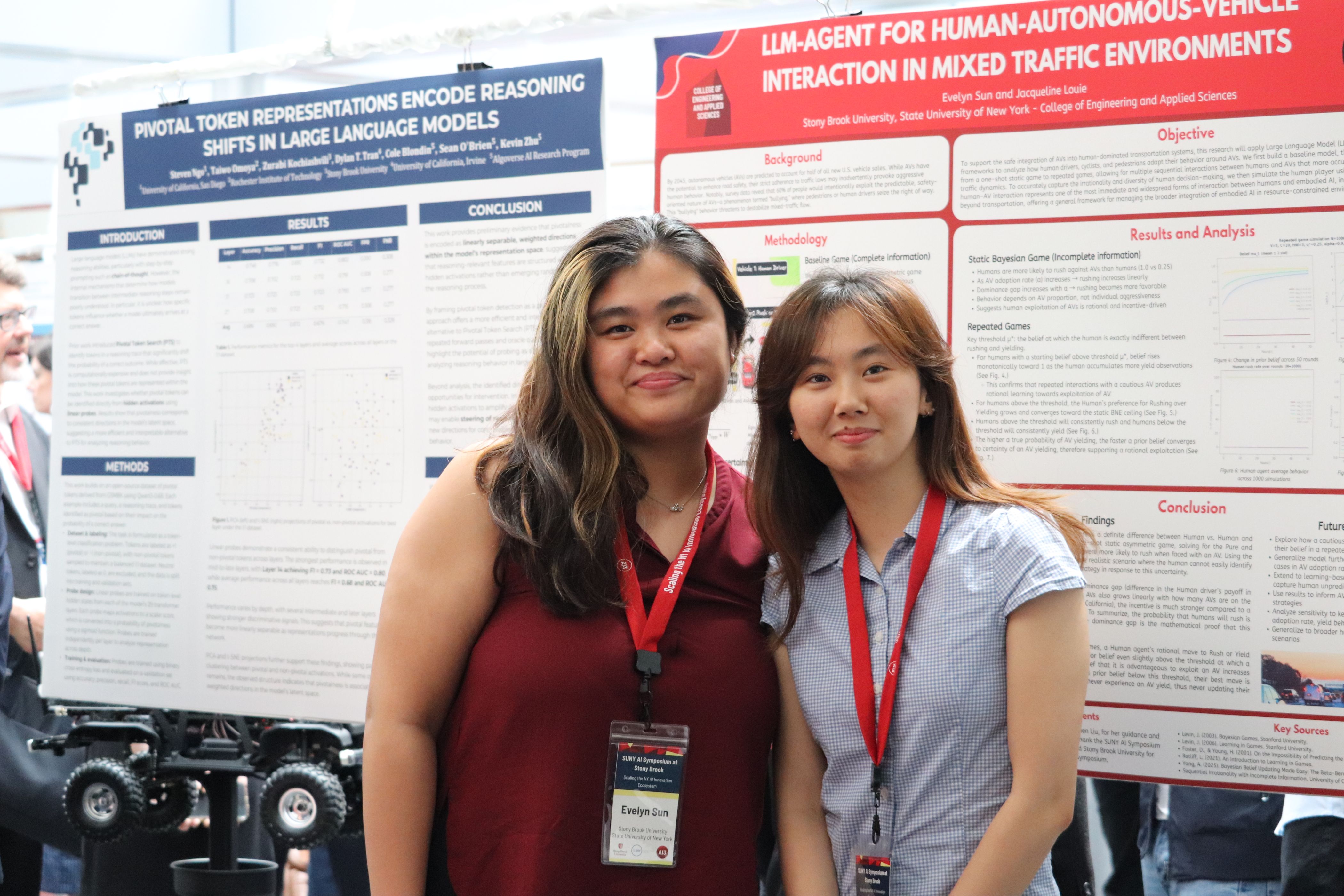
Stony Brook, NY, May 8, 2026 — Stony Brook University’s AI Innovation Institute is launching the AI Innovation & Diffusion Research Experience for Undergraduates (REU), a six-week paid program designed for academically motivated students interested in direct, hands-on research in artificial intelligence.
The summer program, which will run from June 22 through July 31, 2026, is being launched in partnership with Farmingdale State College and Suffolk County Community College. It will bring undergraduate students across Long Island into active research groups and laboratories at Stony Brook, where they will work with graduate students and postdoctoral scholars on projects that reflect the growing impact of AI across disciplines.
Participants will receive a $5,000 stipend and join research clusters of three to four students per mentor. Each student will spend three days per week in active research labs on Stony Brook’s campus, take part in AI Innovation Institute seminars, and present their work at the REU Closing Ceremony at the end of the program.
This Research Experience is built around a central idea: AI research is no longer confined to a single field, department, or technical tradition. At Stony Brook University (SBU), it is moving across biomedical information technology, computational applied mathematics, electrical and computer engineering, chemical engineering, computer science, cognitive science, and other areas of inquiry.
SBU has recruited a cohort of graduate and postdoctoral researchers working in AI-focused research areas that span both core technical analysis and real-world applications. Their projects include video-language model reasoning, agentic AI for blind users, AI-assisted simulated annealing, AI-automated semiconductor workflows, “meaningful” AI mapping for mobile robots, AI-driven medical imaging, collaborative AI, and natural language processing.
For students, this means exposure to AI not only as a technology, but as a research method, a design challenge, a force shaping how disciplines come together to find applicable solutions to real problems.
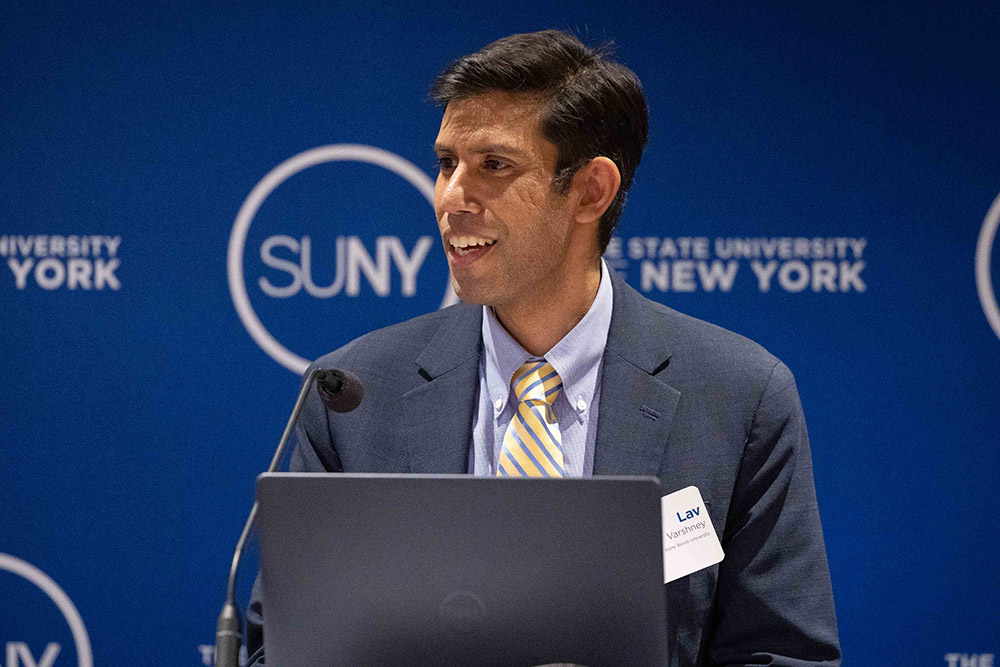
Lav R. Varshney, Della Pietra Infinity Professor and Director of the AI Innovation Institute at Stony Brook University, said, “We want to advance the core of AI — its algorithms, architectures, and foundations — while also helping students see how AI diffuses across scientific, industrial, and societal sectors. By bringing undergraduates into active research environments, especially through partnerships with Farmingdale and Suffolk, we are helping create pathways into the AI-ready workforce and into the larger intellectual community that will shape the field.”
The collaboration with Farmingdale State College and Suffolk County Community College is a defining part of the program. Beyond offering students an intensive summer research experience, AI Innovation & Diffusion REU is designed to strengthen research relationships across the three institutions and build new bridges among faculty, mentors, and students.
For students at Farmingdale State College, the partnership creates a pathway to a range of applied fields. Bahar Zoghi, Associate Dean and Professor of Civil Engineering Technology at Farmingdale State College, said, “When Lav reached out to us, I thought it was a great idea,” Zoghi said. “ I liked that the experience was not only geared toward students in computer science. AI can be helpful in many areas, and students across disciplines need to see how AI connects to the work they want to do.”
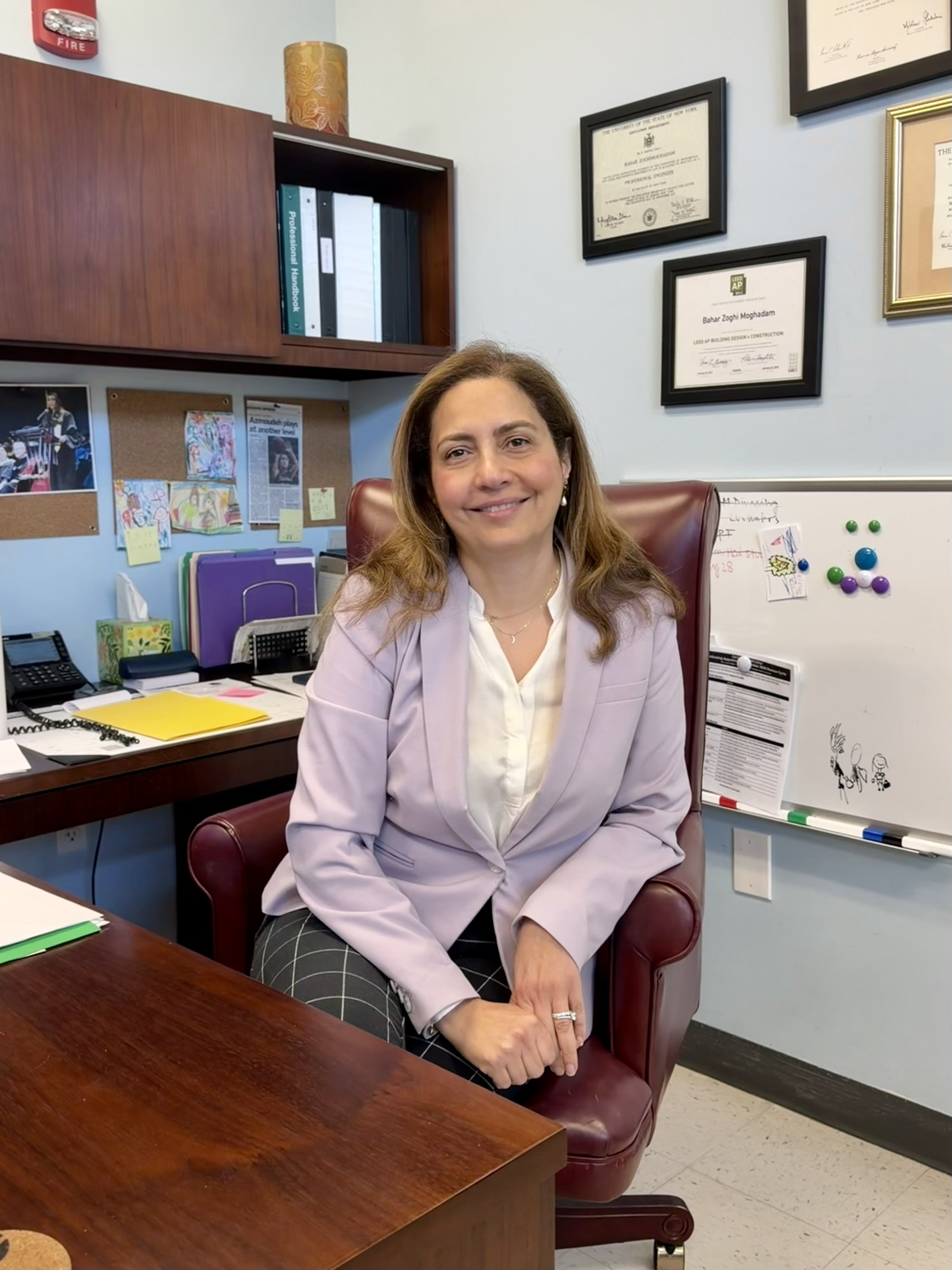
Zoghi also noted that students will enter the program with different levels of AI experience. Some may already be using AI tools in everyday academic work, while others are beginning to understand how it could affect their major or future profession. “There are students from a community college, a technology college, and a research university. This diversity of students and institutions is important. It brings in people from different backgrounds and different levels of experience to work together, learn from one another, and see where they might fit into the new age of AI.”
At Suffolk County Community College, the collaboration opens new opportunities for students to connect AI learning with academic interests and local workforce needs. Fara Afshar, Associate Dean of Academic Affairs and Professor at Suffolk County Community College, said, “The AI Innovation and Diffusion program empowers SUNY Suffolk students to collaborate directly with Stony Brook University’s doctoral mentors and researchers on real-world AI applications. By participating in this project, an interdisciplinary cohort of twenty SUNY Suffolk students contributes to the global knowledge base across fields such as Information Technology, Health Care, Cybersecurity, Business, Accounting, Legal Studies, Psychology, Computer Science, and Mathematics, in addition to gaining skills on how AI can be practically deployed in local industries.
“This collaboration is vital today as the entry-level job market increasingly demands technical AI proficiency. By providing this opportunity, we support our graduates to not only gain employment for higher-paying roles but also be equipped to help our local small businesses that may often lack AI resources.”
As AI literacy and research experience are gaining increasing importance across the workforce, students need opportunities to understand not only how these systems work, but how they are built, evaluated, adapted, and improved.
Through the AI Innovation & Diffusion REU, undergraduates across Long Island will have the chance to contribute to ongoing research while learning what it means to work in multidisciplinary research environments, collaborate with mentors, and communicate their findings to a wider audience. For many students, the experience may also offer an early view into graduate study, research careers, and the different forms of AI work across fields and institutions.
At the end of the six-week program, students will present their work at the REU Closing Ceremony, offering partners, mentors, and faculty a chance to see how they’ve translated research exposure into early project outcomes. For Varshney, Zoghi, and Afshar, that final presentation is one of the moments they are most looking forward to. “We’re excited to see what students will have learned, how they will describe their projects, and how this experience may shape what they imagine for their futures.”