

Stony Brook Researcher Yi Liu is heading a three-year, $622,471 NSF project rebuilding generative AI to create new molecules. He’s also collaborating with BNL researchers to explore AI and ML approaches for the design and optimization of battery electrolytes.
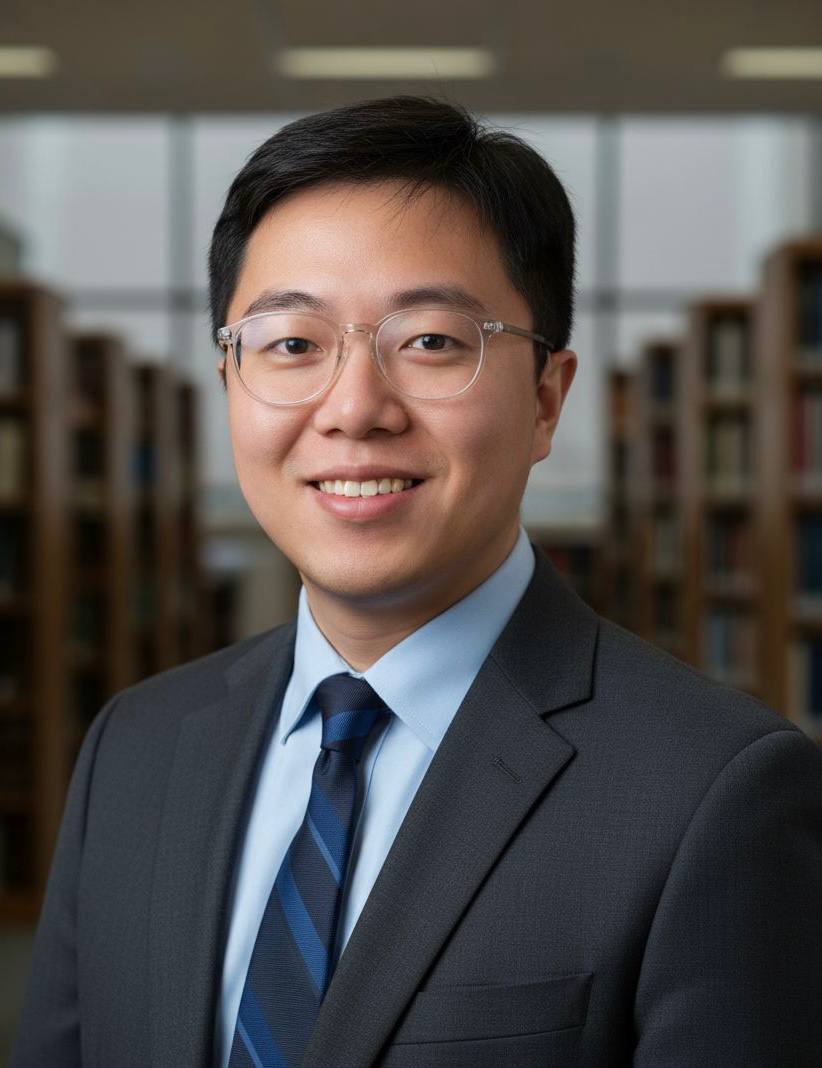
Stony Brook, NY, August 31, 2025 - When a pharmaceutical company sets out to design a new drug, the chemists may propose a thousand candidate compounds. The company is left to conduct laboratory validations, animal studies, clinical trials, and get approval from the Food and Drug Administration — a winding and costly process.
Yi Liu, core faculty member at Stony Brook’s AI Innovation Institute and assistant professor in the Departments of Applied Mathematics & Statistics and Computer Science, has worked at the intersection of AI and biology, chemistry, and materials science for close to a decade.
Describing AI’s role in advancing applications in drug development, Liu says, “The number of possible molecules is enormous, and we cannot test them one by one. Generative AI gives us a way to explore this vast space and create new, promising molecules with desired properties and structures. We can then focus computational and laboratory testing on the most viable candidates, reducing the number of possibilities that need to move further through the development pipeline. Because later-stage testing and clinical trials can get very expensive, you can imagine how significantly this will reduce our efforts.”
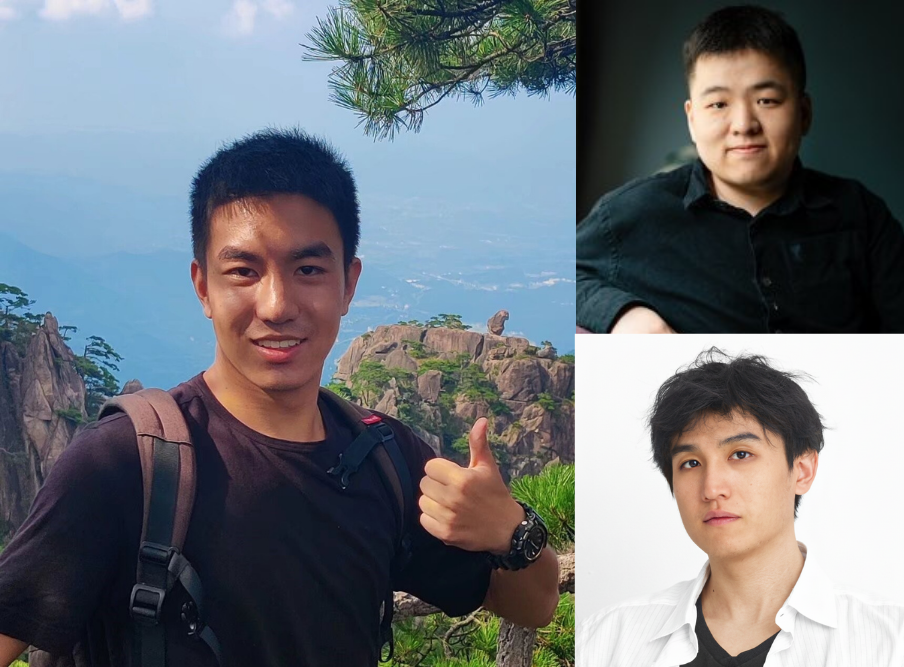
He now leads a three-year NSF project, developing generative AI models for creating molecules, with a total award of $622,471, in collaboration with Dr. Shuiwang Ji at Texas A&M University. At Stony Brook, the project involves his Ph.D. students Jingxiang Qu, Fang Wan, as well as his recently graduated Ph.D. student Wenhan Gao.
Across quantum chemistry, physics, climate science, materials science, and biochemistry, Liu approaches AI for Science problems with a common framework. First, the scientific problem is represented in a form the AI model can understand and use effectively. Knowledge unique to the discipline — such as physical laws, geometric structure, or chemical constraints — is then incorporated into the model. Finally, the model is evaluated against strong benchmarks using measures that reflect not only accuracy, but also scientific validity, efficiency, and, when possible, agreement with experiments.
“There is no one-size-fits-all AI model for science,” Liu says. “Different scientific problems come with different data structures, domain knowledge, and physical constraints, and the model has to be designed with these differences in mind.” That can mean incorporating chemical rules, physical laws, or other domain-specific knowledge, depending on the problem.
The NSF project tackles one such failure. Using generative AI to create molecules is not the same as using it to generate images.
AI image generators use a technique called diffusion, wherein a photograph that’s being used to train the model is corrupted with noise. The model then learns to reverse the process, so that when it is handed pure static, it can produce an image that never existed.
The same technique, however, does not produce equally good results for molecular generation. Liu studied the problem alongside Ph.D. students Wenhan Gao and Jingxiang Qu. “We saw that the model was generating large molecules more effectively as compared to the smaller ones, even though they are more complex, and constituted less training data.” The difference — pixel values in image data are between 0–255 regardless of an image’s size, but a molecule cannot be represented like an image. It has a spatial extent that depends on its atom count, so an equal amount of noise is relatively much more disruptive to a small molecule. “The fix was simple,” Jingxiang Qu said. “Instead of rescaling the molecules, we adjusted the starting noise according to molecular size, so that it matched each molecule’s natural spatial scale.”
Two more papers from Liu's group advanced the research, each diagnosing an inherited assumption from text or image generation that didn’t apply to generating molecules. The works were published at leading conferences, ICML, ICLR, and KDD, and the NSF funding followed.
The third paper, ‘Uncertainty-Calibrated Diffusion for Reliable 3D Molecular Graph Generation,’ was led by Ph.D. student Fang Wan, where research showed that a generated molecule’s quality can degrade through the denoising process because uncertainty in the learned model can compound with the noise used during generation. Wan comments, “To address this issue, we developed an uncertainty-calibrated diffusion method that would let the model account for its own uncertainty during generation. This helped prevent errors from accumulating through the denoising process, leading to more reliable molecular candidates.”
Wan is also carrying out the core research for Liu's project on next-generation battery design. Liu, the Stony Brook Principal Investigator (PI), is co-leading the research with BNL PI Dr. Enyuan Hu. The team is currently developing AI and machine learning models to help design and optimize electrolytes and electrodes for lithium- and sodium-based batteries through literature mining, molecular screening, property prediction, and experimental validation.
"Battery research has a long published record,” Liu says. “We didn’t want to start something new without knowing what others are working on." So the collaboration began with literature mining.
The team has now developed a web-based system that processes published papers on the subject, drawing evidence from across formats and turning scattered information on formulations, experimental conditions, and performance into structured, verifiable records. “The goal was to turn labor-intensive literature review into a scalable and repeatable scientific data pipeline while keeping researchers in the loop to verify the extracted evidence.”
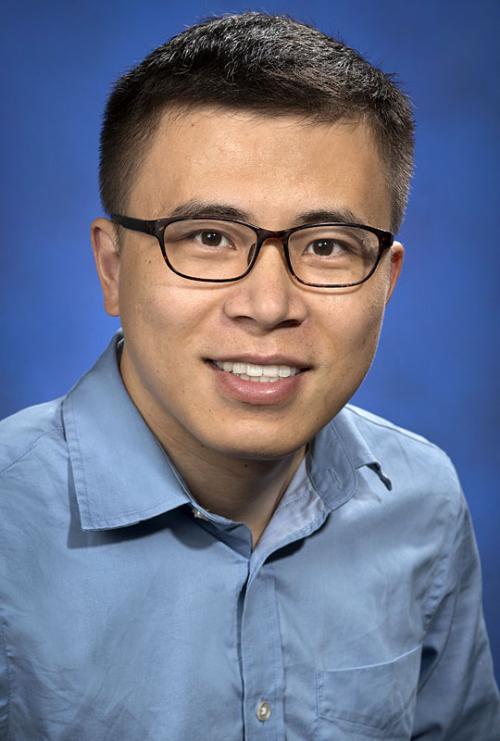
Hu, whose research at BNL focuses on advanced battery systems and battery interphases, sees the project as moving from organizing existing knowledge toward AI-guided battery design and experimental validation. “The literature-mining system is only the first step,” Hu says. “Our long-term goal is to use AI to help us screen molecular structures, predict electrolyte and interfacial properties, and identify promising solvent, salt, additive, and electrolyte formulations. We can then test the most promising candidates experimentally and use those results to improve the next round of predictions. Looking further ahead, we envision connecting AI-guided design with automated experimentation to create a more integrated, closed-loop discovery process.”
The two projects cover the beginning and the end of a longer arc. Beyond them, Liu is exploring several other exciting avenues, including one particularly ambitious effort to connect the entire scientific-discovery process. “Scientific work moves through four stages — forming a hypothesis, finding the right data, choosing a model, and validating the result in a laboratory,” Liu says. “Each stage is usually handled on its own terms, with its own assumptions and resources. The idea is to build AI agents to carry a problem through all four layers, and a robot that runs the experiment.” A closed loop.
This is an ambitious undertaking, but Liu finds the work more rewarding when one starts with the science — a question in biology, quantum science, materials science, or batteries — and focuses on AI afterward. He asserts, “AI is a tool. The problem being solved is the point.”