
The AI Community will be hosting our very first Datathon๐Ÿ’ก๐Ÿ“Š

Ready to turn data into groundbreaking insights? ๐Ÿง 

Compete in our Datathon, where you'll analyze real-world data ๐Ÿ“ˆ and share innovate solutions in these tracks:

๐Ÿซ Student Life

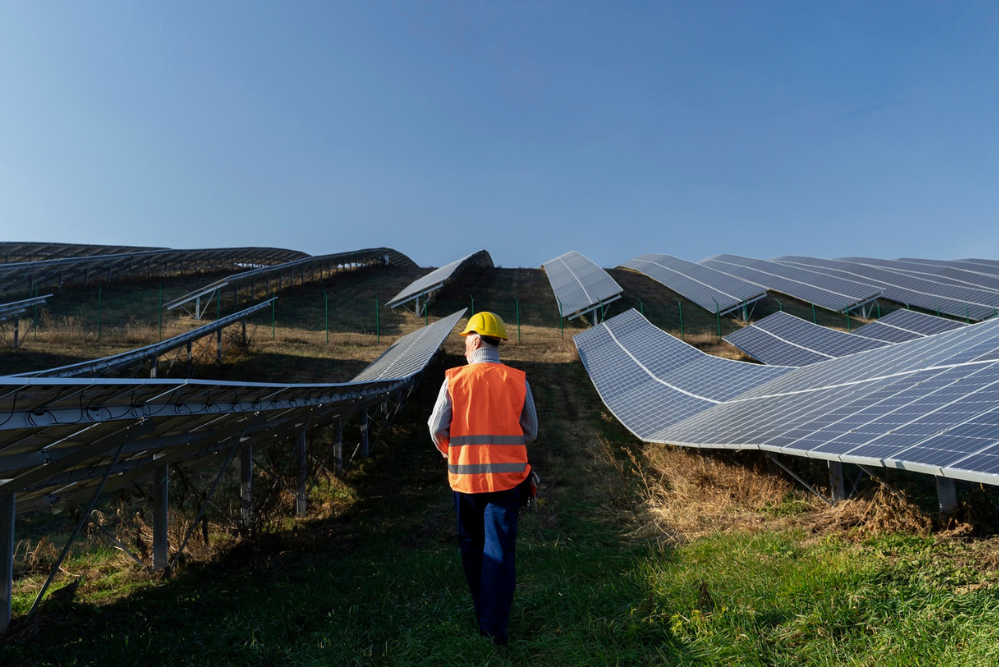
๐ŸŒฑ Environment & Sustainability

๐Ÿ’‰ Health & Wellness

๐Ÿ’ฐ Finance & Economics

Whether you're a data pro or just starting out, this is your chance to network, learn, and win exciting prizes! ๐Ÿ†๐ŸŽ‰ Bring your creativity ๐Ÿงฉ collaborate with fellow students ๐Ÿง‘โ€๐Ÿคโ€๐Ÿง‘ and gain hands-on experience showcasing your analytical skills ๐Ÿ’ป

Submissions will be judged by professors ๐Ÿง‘โ€๐Ÿซ so take this chance to impress them!

There will be free food โ˜• and games ๐ŸŽฒ to fuel your brain and imagination! Don't miss out--register now and unleash the power of data! ๐Ÿ”ฅโœจ

Registration Form: https://forms.gle/6XYMfmhyAByzFpxz5

Time: Friday (4/4) 10:30am - 5pm โฐ

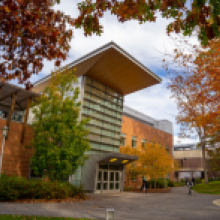
Location: Bauman Center ๐Ÿ“

You are cordially invited to attend the biweekly Brookhaven AI Mixer (BAM). BAM includes one short talk on AI research happening at BNL, followed by an open mixer over coffee and snacks for everyone to network and discuss all things AI. The first half hour will consist of presentations that will be available via ZOOM, and the second half hour will be for in person only networking.

Join us every other Tuesday at noon in CDSD's Training Room (building 725, 2nd floor) to learn about interesting AI methods and applications, engage with potential collaborators, prepare for pending FASST funding calls, and build a community of AI for Science at BNL.

Learning Generalizable Program and Architecture Representations for Performance Modeling

Abstract: Performance modeling is an essential tool in many areas of computer science and engineering. However, existing performance modeling approaches have limitations, such as high computational cost, narrow flexibility, or restricted accuracy/generality. To address these limitations, this talk introduces PerfVec, a novel deep learning-based performance modeling framework that learns high-dimensional and independent/orthogonal program and microarchitecture representations. Once learned, a program representation can be used to predict its performance on any microarchitecture, and likewise, a microarchitecture representation can be applied in the performance prediction of any program. Additionally, PerfVec yields a foundation model that captures the performance essence of instructions, which can be directly used by developers in numerous performance modeling-related tasks without incurring its training cost. The evaluation demonstrates that PerfVec is more general and efficient than previous approaches. This talk will also introduce how PerfVec's design principles can benefit broader research areas.

Biography: Lingda Li is a computer scientist at Brookhaven National Laboratory. He is generally interested in computer architecture and programming model research, with focus on simulation/modeling, memory systems, and machine learning. Before joining BNL, he worked at the Department of Computer Science of Rutgers University as a postdoc to carry out GPGPU research. He obtained a PhD in computer architecture from the Microprocessor Research and Development Center at Peking University.

Location: CDS, Bldg. 725, Training Room

Join ZoomGov Meeting: https://bnl.zoomgov.com/j/1605837856?pwd=kYqJs4bVBt4E0cMCWR6GXH3wxzOoiw.1

Meeting ID: 160 583 7856
Passcode: 161580

Professor Petar M. Djuric, SUNY Distinguished Professor and Savitri Devi Bangaru Professor in Artificial Intelligence at Stony Brook University, has been selected as a plenary speaker at the upcoming 23rd IEEE Statistical Signal Processing Workshop (SSP 2025). The event will be held from June 8-11, 2025, in Edinburgh, Scotland, and is one of the premier international forums for the latest advances in statistical signal processing.

Professor Djuric's plenary talk, titled Quantifying causal relationships: Dynamic strengths, attributions, and confounders, will take place on June 10 from 9:00 AM to 10:00 AM EST. His presentation addresses foundational challenges in data-driven causality, proposing novel methodologies for quantifying causal strength in both static and dynamic systems, with special attention to latent confounders and attribution analysis.

This work has broad implications across disciplines including healthcare, economics, and climate science--areas where causal understanding drives critical decisions and innovations.

Professor Djuric has been a long-standing leader in the fields of machine learning and signal and information processing. After receiving his Ph.D. from the University of Rhode Island, he joined the faculty at Stony Brook University, where he served as Chair of the Department of Electrical and Computer Engineering from 2016 to 2023. He is also the founding Editor-in-Chief of the IEEE Transactions on Signal and Information Processing Over Networks and a Fellow of IEEE, EURASIP, AAIA, and AIIA.

Early bird registration for the workshop is open until April 30, 2025. For more information, visit the official SSP 2025 website.

Language shared online through social media or messaging reflects people's thoughts and emotions. Processing this data with Natural Language Processing (NLP) and machine learning can reveal mental health and psychological traits. For example, analyzing Facebook posts enables me to predict depression before it is clinically diagnosed and highlight particular symptoms. At the population level, billions of geo-tagged Tweets can be used to monitor health risk patterns, including depression and anxiety trends across communities. Beyond assessment, I'm using Large Language Models (LLMs) to improve mental health care, including training therapists and assisting with Cognitive Behavioral Therapy. These applications of NLP and Al may lead to earlier and more effective interventions and improved access for underserved populations. Speaker: Johannes Eichstaedt, Ph.D. Assistant Professor, Psychology & Human-Centered Al, Stanford University

Abstract: The development of embodied AI has largely focused on scaling data and computational power, often at the cost of energy efficiency. In contrast, biological intelligence achieves remarkable adaptability with minimal resources, inspiring a shift toward neuromorphic AI, an approach that mimics the structure and dynamics of biological neural systems. In this talk, I will explore the promises and challenges of neuromorphic computer vision from three key perspectives: algorithms, robot actions, and data. First, I will discuss algorithmic advances, including continuous visual hull reconstruction, continuous-time human motion field estimation, and unsupervised independent motion segmentation. Next, I will illustrate how neuromorphic vision enables agile robotic actions by leveraging event-based perception for real-time decision-making. Finally, I will address challenges in training data-driven models with event data, highlighting strategies to enhance data availability and efficiency. By integrating these elements, neuromorphic AI paves the way for energy-efficient, high-performance embodied intelligence in dynamic real-world environments.

Speaker Bio: Ziyun (Claude) Wang is a fifth-year Ph.D. student in the General Robotics, Automation, Sensing & Perception (GRASP) Lab at the University of Pennsylvania, advised by Professor Kostas Daniilidis. His research focuses on developing algorithms for neuromorphic computer vision and integrating them with real hardware to enable agile perception in embodied AI systems. Prior to his Ph.D., he worked at the Samsung AI Center New York, where he developed 3D reconstruction techniques for robotic applications and earned three patents. He also contributed to the Apple Vision Pro team, enhancing user comfort for AR glasses. His research work has been recognized at major computer vision, robotics, and machine learning venues including the AAAI Conference on Artificial Intelligence (AAAI), European Conference on Computer Vision (ECCV), International Conference on Learning Representations (ICLR), Conference on Computer Vision and Pattern Recognition (CVPR) workshops, and IEEE Robotics and Automation Letters (R-AL), with an oral presentation at ECCV placing in the top 2.7%. His research aims to drive the development of next-generation bio-inspired AI systems, enabling more efficient, adaptive, and intelligent embodied perception.

The Association for Computational Linguistics is the international scientific and professional society for people working on problems involving natural language and computation. Membership includes the ACL quarterly journals, Computational Linguistics and Transactions of the ACL, reduced registration at most ACL-sponsored conferences, discounts on ACL-sponsored publications, and participation in ACL Special Interest Groups.

An annual meeting is held each summer in locations where significant computational linguistics research is carried out.

For more information and registration, visit the official website.

You are cordially invited to attend the biweekly Brookhaven AI Mixer (BAM). BAM includes one short talk on AI research happening at BNL, followed by an open mixer over coffee and snacks for everyone to network and discuss all things AI. The first half hour will consist of presentations that will be available via ZOOM, and the second half hour will be for in person only networking.

Join us every other Tuesday at noon in CDSD's Training Room (building 725, 2nd floor) to learn about interesting AI methods and applications, engage with potential collaborators, prepare for pending FASST funding calls, and build a community of AI for Science at BNL.

Embodied Intelligence at Scientific User Facilities

Abstract: This presentation explores the active work integrating artificial intelligence and robotics at the National Synchrotron Light Source II, and a perspective for the future. Through various case studies, we highlight the optimization of operations, improved experimental outcomes, and the orchestration of distributed multimodal experiments. This ongoing development includes collaborators from across the light and neutron sources in the DOE complex. We will elaborate on the open-source Bluesky project, and its capabilities to support adaptive and autonomous experiments. Additionally, we will discuss how Bluesky can be integrated with open-source robotic control software to unlock new flexible automation for autonomous scientific research, which scales to new experiments and continues to leverage human ingenuity.

Biography: Dr. Phillip M. Maffettone is an Associate Computational Scientist in the Data Science and Systems Integration Division at NSLS-II. His research focuses on accelerating scientific discovery at user facilities through the integration of robotics, artificial intelligence (AI), and advanced experiment orchestration systems. He leads the N3XTware project, constructing the software architecture for the next 12 beamlines to be built at NSLS-II. Prior to this he built the brain on the world's first mobile robotic scientist at the University of Liverpool, and later spearheaded the machine learning platform for a biotechnology start-up, BigHat Biosciences. He holds a DPhil in Inorganic Chemistry from the University of Oxford and a B.S. in Chemical Engineering from the University at Buffalo.

Location: CDS, Bldg. 725, Training Room

Link: https://bnl.zoomgov.com/j/16049713 31?pwd=nc5CV3cOFrdYxordFieP W07tIDmwYb.1

Meeting ID: 160 497 1331
Passcode: 289875