You are driving a car down a city street, when you see a child playing with a ball by the side of the road. When the ball suddenly shoots across the road, you slam on the brakes—anticipating that the child may run out in the street chasing the ball.

Action anticipation, the task of predicting the next action in a sequence, is an important problem in computer vision. For instance, accurately predicting the actions of other cars in a driving sequence is essential to building safe self-driving vehicles. Typically, video frames are used to train AI systems for action anticipation, but language models are another type of data that can be helpful here. 
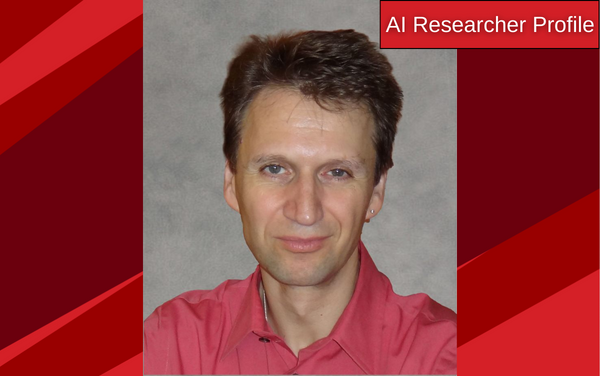
Part eight of our AI Researcher Profile Series invites Professor Klaus Mueller of the Department of Computer Science to discuss his extensive work with Artificial Intelligence, and how he uses it to produce a human-machine relationship that enables the machine, but empowers the human. 

AI Institute: What sparked your interest in Artificial Intelligence? 

With the COVID-19 pandemic, anti-Asian sentiment, especially Sinophobia, has become a big topic of discussion in the realm of social media. As a result, studies have focused on anti-Asian sentiment data during the pandemic. However, they fail to include anti-Asian sentiment data before the pandemic. This brings about the misconception that anti-Asian sentiment has only recently come to be. In reality, it has been around for decades. 

This is a repost of an article written by Alissa Pabon on the Stony Brook University Department of Computer Science website. 

A beloved professor at Stony Brook University’s Department of Computer Science has been named a Fulbright Scholar for the 2022-2023 academic year.

Distinguished Professor Steven Skiena joins the ranks of prestigious world leaders and academics with a Fulbright Scholar Award, a prestigious fellowship that grants scholars an opportunity to conduct their research overseas.