

Technology Futurist Jamie Metzl and Physician-Executive Sarah Matt Share Insights on advancing and implementing AI.
Stony Brook, NY, Nov 17, 2026 - This year’s SUNY AI Symposium at Stony Brook University convened leading artificial intelligence researchers, thought leaders, industry partners, and policymakers from across New York State and beyond. Held in April at Stony Brook’s Charles B. Wang Center, the event catalyzed discovery, dialogue, and action in artificial intelligence by showcasing cutting-edge research, hosting open, inclusive conversations on science, technology, ethics, and policy, and sparking collaborations between academia, industry, and government.
The talks, panels, poster presentations, and industry and art displays together brought up several challenges and concerns surrounding designing and implementing AI tools. The friction between rapid technological advancement and the capacity of human institutions to adopt and regulate these tools for the public good was a common point of discussion. Two of the most compelling voices at the symposium were from bestselling authors—Dr. Sarah Matt, a physician-executive, and Jamie Metzl, a technology futurist —who both shared insights addressing the core of the issue.
Lowering the Friction of Care: Sarah Matt on Clinical Trust
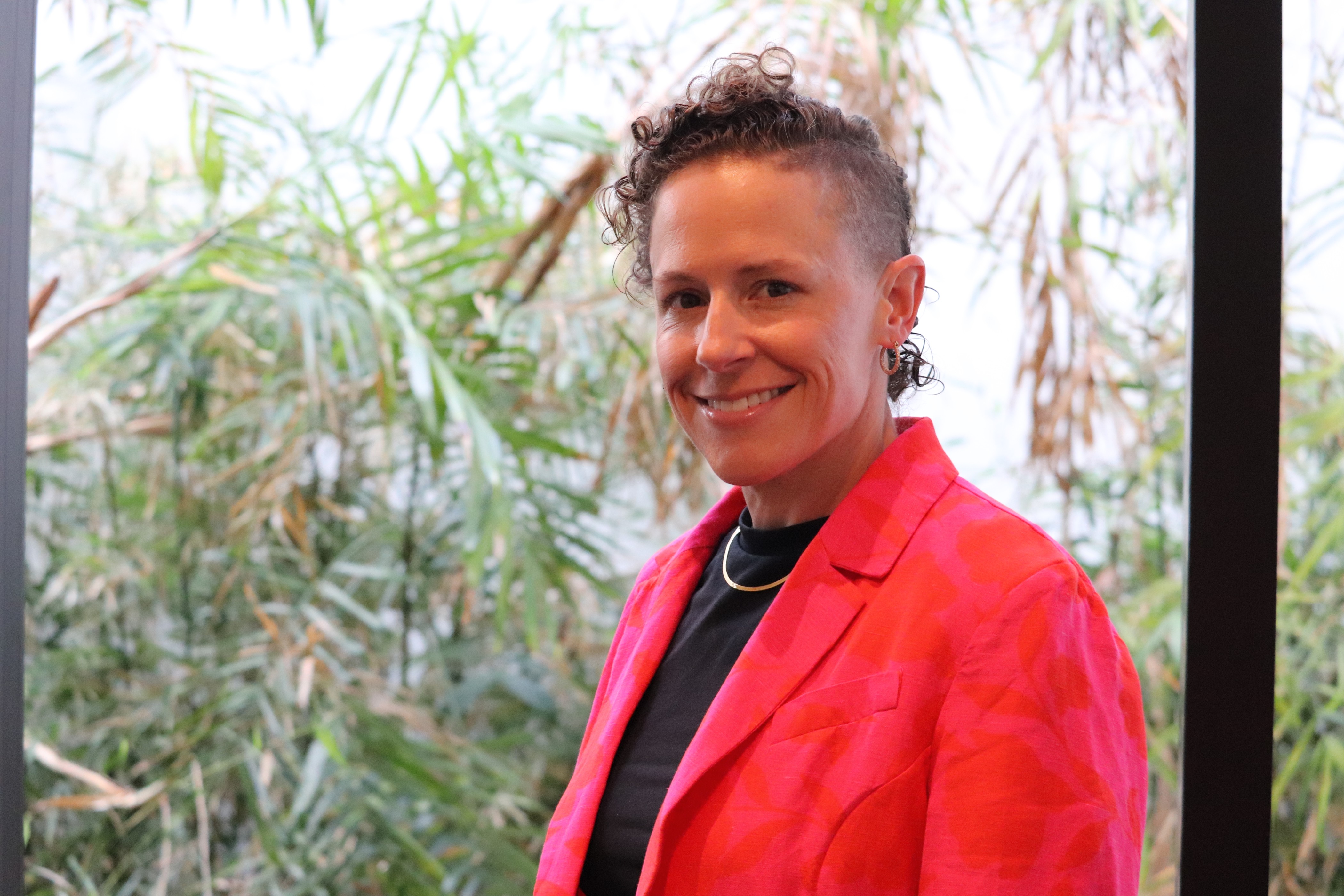
Before advising health systems, digital health companies, and investors on technology integration, and before serving as VP of Healthcare Product Strategy at Oracle Health, where she was part of the Cerner acquisition team, Dr. Sarah Matt spent years on the front lines of clinical care. Her recent book, The Borderless Healthcare Revolution, offers a working model for how care delivery can be redesigned for improved medical access.
In her panel discussion, Matt shared her excitement with fellow healthcare professionals. “AI is going to help us solve all sorts of new problems. We're going to cure cancer. And so when we think about hard medical problems that we've been kind of touching around the edge, I think we can actually make those things happen. From a healthcare and biotech perspective, new devices, new medications, new diagnoses, new abilities to cure are here, and we're just getting started.”
She also highlighted a structural disconnect within healthcare leadership, saying it's one of the first times in healthcare history where most senior leaders may have the least hands-on experience with the new technology. “Technical feasibility is no longer the primary hurdle. That’s the easy part. But we can't adopt AI and put it into our existing systems fast enough until we solve for safety, scalability, and trust."
Sometimes healthcare doesn't feel like it can be iterative. But in this case, your curiosity can be iterative when it comes to AI. Who knows what it can do…until we try.
Sometimes healthcare doesn't feel like it can be iterative. But in this case, your curiosity can be iterative when it comes to AI. Who knows what it can do…until we try.
Sarah Matt
In an interview with the AI Institute, Matt offered the framework her book suggests, spanning five key pillars: physical, financial, cultural, digital, and trust and knowledge.
“Consider the financial perspective of seeking healthcare access,” she said. “And the first thought that comes to mind is co-pay, but that's the tip of the iceberg. There are all these indirect costs: the cost of taking two buses to your doctor's office, the cost of childcare, the cost of taking time off from work when you don't get time off from work. And so especially in healthcare delivery, we also need to think about how much it's gonna cost them to get to our appointment.”
Matt sees the breakdown of the fifth pillar, trust, as the most acute challenge for implementing AI in healthcare. "There are huge opportunities for AI involvement on the clinical side, on the financial side, and on the operations side. There’s a lot less pushback on finance and operations because no one gets upset when you automate procurement, and no one dies. But the clinical side, that’s where I see the least trust and the most pushback. It comes down to our culture in medicine. If a doctor trusts an algorithm and something goes wrong, it’s their medical license on the line. But if everything goes right, nobody knows."
Matt attributes the loss of trust to what she calls the "shiny object syndrome"—the tendency for health system leaders to purchase trendy AI software before fully understanding the actual problem on the ground. "Choosing the tool first and not the problem to be solved first is deeply problematic," she noted. "When the folks with the problem have input into what actually gets chosen, there’s less pushback during implementation. If you want trust in healthcare in the AI space, you need to bring people who interact with patients—nurses, doctors, pharmacists—in at the design phase."
Matt emphasized that the ultimate test for AI will be in how it serves patients, particularly those navigating complex systems in non-native languages or with limited digital literacy. “Nearly 80 million American adults have limited health literacy. They don't know how to read prescription labels. They don't know how to read discharge instructions. So when we communicate to them, it needs to happen in their language.”
The bias AI systems have acquired from training datasets adds another layer of complexity. “Even today in 2026, Black women die in childbirth three to four times more often than white women. We have to make sure that when we're building these systems, we're controlling for income, insurance, geography, English-speaking, everything, because if we build in those biases, we are not doing our work right.”
She reflects, “That’s why adoption and implementation are where we will slow down. A lot of times we'll make a budget line for a new solution, but we won't make a budget line for trust. We won't make a budget line for training people properly. Those are the things that need to be done, so AI can actually be implemented at scale.”
Despite all the problems in healthcare, Matt remains optimistic. “It's necessary that the technology continues to improve, and so does our ability to take care of patients. We just have to figure out the best way to partner with AI.”
Looking Past the Horizon: Jamie Metzl on Human-AI Co-Evolution
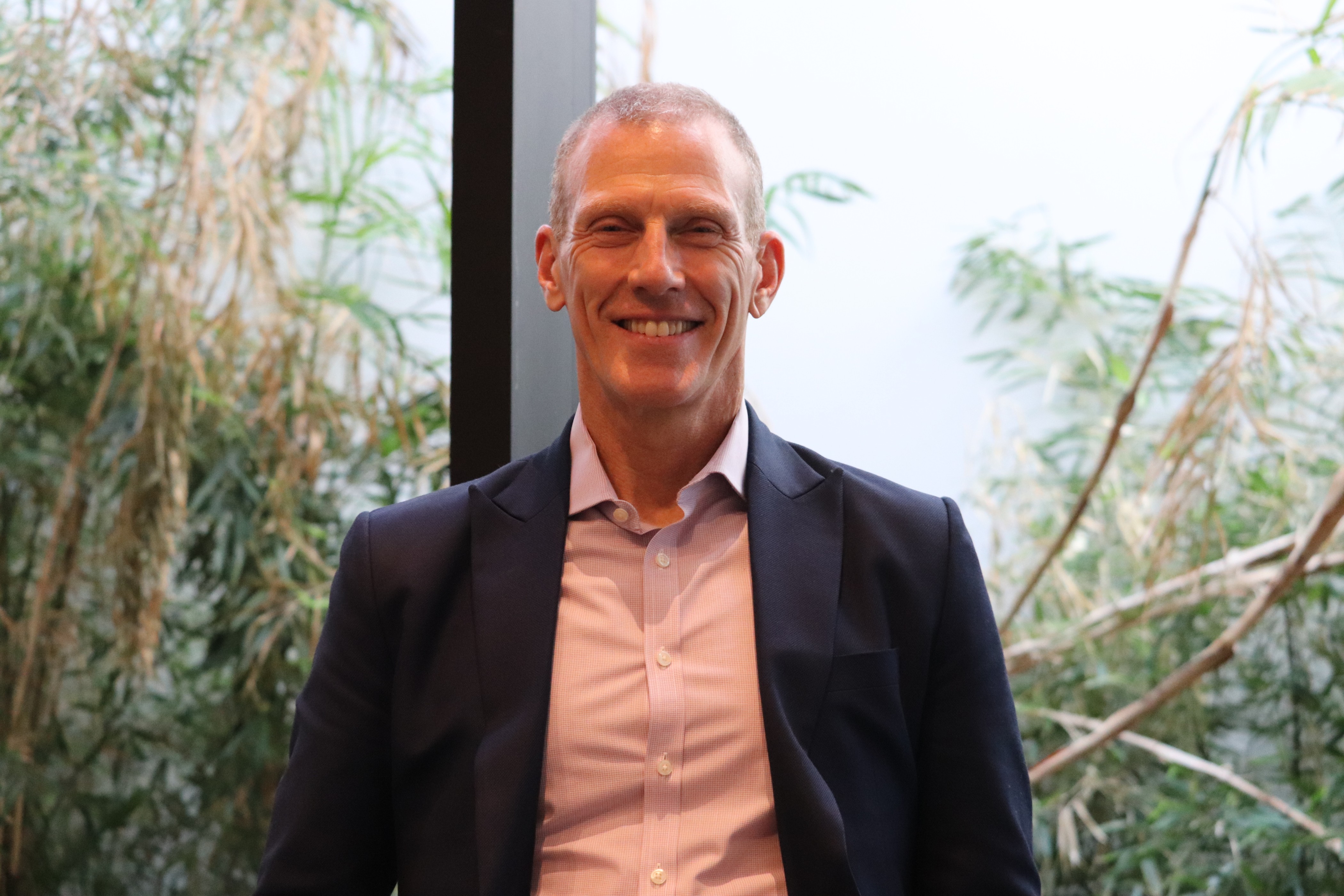
Jamie Metzl, a geopolitical expert, technology futurist, and founder of the global movement OneShared.World, takes a long historical view of technological disruption. His latest book, The AI Ten Commandments, is an unprecedented publishing experiment. It is the first major trade non-fiction book co-authored by a human and an AI, explicitly listing GPT-5 as a named co-author.
In his panel discussion, Metzl said, “If you remember one message from me today, it's this: the idea that we are building some general-purpose artificial intelligence that's going to replace the complete breadth of human beings after 4 billion years of embodied evolution is absurd and preposterous. What you guys are doing here at Stony Brook University—thinking about art and philosophy and music and humanities and science and math and how everything fits together—that is the name of the game. That's the future of our species.”
“AI is not merely an answer engine or a faster calculator, but a reflective tool that allows humanity to view and better itself collectively.”
Metzl discussed his book in an interview with the institute, describing the intensive six-month collaboration with the language model. “We went back-and-forth thousands and thousands of times. It felt like having a co-author in the room who had a different skill set than me. If a human had played the role this AI played in synthesizing human history and ethical traditions, I would have been committing fraud by not listing their name."
The book is founded upon thousands of years of recorded human history, spanning Abrahamic, Hindu, Buddhist, and Indigenous traditions, to extract universal principles for peaceful coexistence. For Metzl, using an advanced generative model to curate ancient human wisdom highlights the true nature of the technology.
AI isn't about cheating. I think it offers so many new ways of thinking creatively, expanding our possibilities in conjunction with these tools. It's one of the reasons my new book discusses ethics and values that we need to be weaving into these systems, especially now, at the easiest moment to establish regulations and governance systems.
Jamie Metzl
“The goal of AI,” Metzl said, “Like any tool or capability, is to help us do things that are important to us. We’re making big bets allocating resources, including water and energy and land and money, towards building these capabilities, and we'll see what the benefits are. But it’s the same with every technology. Every time you're using energy to make steel, it has to be that the benefit of the steel you're creating is greater than the cost of the inputs to create the steel.”
Addressing the global regulatory landscape, Metzl said, “At the moment, we're figuring out different models on AI. There's the European Union, trying to have a more active regulatory infrastructure. At one time, the United States was trying to maintain balance, but now we are all in on acceleration in a way that I think will ultimately prove self-defeating. And then there's the Chinese model.”
“While I am an accelerationist,” he said, “we need to accelerate our public engagement and governance systems in parallel with our technological capabilities. We need to make sure we're moving forward in the safest and wisest way possible.”
Stony Brook’s AI Innovation Institute as an Anchor for Responsible AI
Stony Brook President Andrea Goldsmith also spoke at the symposium, “AI is a powerful tool that we need to figure out how to harness for good. I don’t think we can keep up with the speed at which it’s evolving, so we need to build self-policing into this technology. But human intelligence is truly unique. Creativity, vision, instinct, perspective, collaboration, emotion, compassion. These are things that AI just cannot do. And so how we take this powerful tool and merge it with what’s uniquely human.”
Stony Brook’s AI Institute has since brought together industry leaders, partners, researchers, and educators through a series of seminars, grants, and learning experiences, building a lasting force for artificial intelligence research, innovation, and public good. As US institutions and organizations continue to drive AI innovation and diffusion across the globe, these conversations with Matt and Metzl will remain vital to the charge, reminding us that designing and working with artificial intelligence ultimately calls for an honest examination of the self.