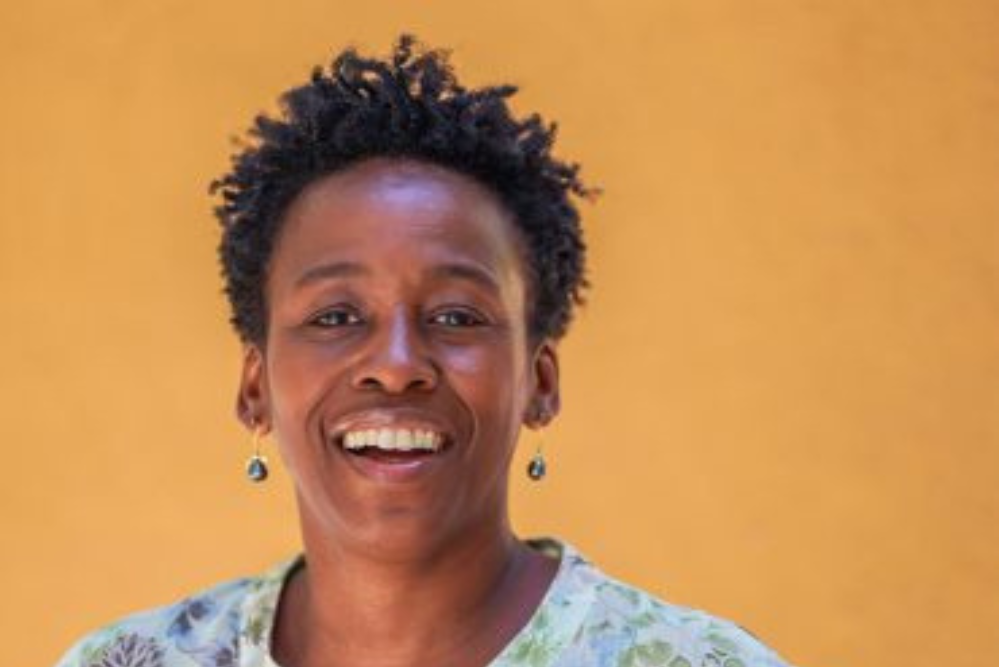
AI for Conservation: AI and Humans Combating Extinction Together by Daniel I. Rubenstein of Princeton University

ABSTRACT: The state of our planet is not good. We have lost more than 60% of the world's wildlife. Stopping the decline remains a challenge, especially since acquiring appropriate knowledge is expensive, time consuming and risky. Visual observations following the fates of a few individuals was the currency of the realm. But GPS technology and now machine learning provide a non-invasive scalable alternative. Photographs, taken by field scientists, tourists, automated cameras and incidental photographers, are the most abundant source of data on wildlife today. Wildbook, a project of tech for conservation coordinated by a non-profit Wild Me, is an autonomous computational system that starts from massive collections of images and, by detecting various species of animals and identifying individuals, combined with sophisticated data management, turns them into high-resolution information databases, enabling scientific inquiry, conservation and citizen science.

BIO: Dan Rubenstein is the Class of 1877 Professor of Zoology. He is currently Director of Princeton's Environmental Studies Program and is former Chair of Princeton University's Department of Ecology and Evolutionary Biology and Director of Princeton's Program in African Studies. He is a behavioral ecologist who studies how environmental variation and individual differences shape social behavior, social structure, sex
roles and the dynamics of populations. He has special interests in all species of wild horses, zebras and asses, and has done field work on them throughout the world identifying rules governing decision-making, the emergence of complex behavioral patterns and how these understandings influence their management
and conservation. In Kenya he also works with pastoral communities to develop and assess impacts of various grazing strategies on rangeland quality, wildlife use and livelihoods. He has also developed a scout program for gathering data on Grevy's zebras and created curricular modules for local schools to raise awareness about the plight of this endangered species. He engages people as 'Citizen Scientists' and has recently extended his work to measuring the effects of environmental change, including issues pertaining to the global commons
and changes wrought by management and by global warming, on behavior.
IACS Research Theme: Human Centered Computing Seminar

Abstract: The AI art platform Artbreeder hosts daily remix parties where users build on each other's work, creating transparent evolutionary chains of images from a single seed. This study analyzes 130,882 images from 368 remix parties to identify the drivers of novelty, complexity, and competitive success. The results reveal an interesting tension: while more novel parent images produce more novel and complex children and attract more likes, users paradoxically prefer to remix images that are less novel and complex. At the group level, larger remix parties produce more novelty at the cost of lower complexity. Additionally, images tend to converge towards common thematic attractors (e.g., steampunk scenes, alien architecture, furries) over the course of remix parties. These results provide quantitative insights into collective creativity--the production of novelty by groups of people--a typically opaque aspect of human cultural evolution.

Speaker: Dr. Mason Youngblood

Location: Institute for Advanced Computational Science, Seminar Room
West Campus - SAC- Student Activities Center - Ballrooms A & B 100 Nicolls Road Stony Brook NY 11794 Job Fair.jpg The Career Center invites Alumni Employers and Job Seekers to the IT/Computer Science Job and Internship Fair this spring. Job Seekers: A job fair is an opportunity for you to present yourself professionally in person to a potential employer, while showcasing your communication skills. Get more information Alumni Employers: Held in both the fall and spring semesters, this event is ideal for employers looking to fill internship, co-op, part-time and full-time opportunities in the field of information technology (i.e. Software Engineering, Network Administration, Web Development, etc.). Register here to recruit top SBU talent.


Time: 04/28 Wed 3pm-4pm

Remote Access
Join Zoom Meeting https://stonybrook.zoom.us/j/95617197636?pwd=KytzZ2pVRG9SZGpKZUtpNXJISjNjZz09 
Meeting ID: 956 1719 7636 Passcode: 924293

Title: Brain imaging genetics for Alzheimer's disease: integrated analysis and machine learning

Li Shen, Ph.D.
Professor of Informatics
Department of Biostatistics, Epidemiology and Informatics 
Perelman School of Medicine
University of Pennsylvania

Bio: Li Shen, Ph.D., is a Professor of Informatics in the Department of Biostatistics, Epidemiology and Informatics at the Perelman School of Medicine in the University of Pennsylvania. He is an elected fellow of the American Institute for Medical and Biological Engineering (AIMBE). He obtained his Ph.D. degree in Computer Science from Dartmouth College. The central theme of his lab is focused on developing computational and informatics methods for integrative analysis of multimodal imaging data, high throughput omics data, cognitive and other biomarker data, electronic health record (EHR) data, and rich biological knowledge such as pathways and networks, with applications to complex disorders. His research interests include medical image computing, biomedical informatics, machine learning, network science, imaging genomics, Alzheimer's disease, and big data science in biomedicine. He has authored over 280 peer-reviewed articles (h-index 57) in these fields. Dr. Shen's work has been continuously supported by the NIH and NSF, and he is presently the PI of multiple NIH and NSF grants on developing computational methods for various biomedical applications including brain imaging genomics, genetics of Alzheimer's disease, genetics of human connectome, mining drug effects from the EHR data, and big data mining in brain science. He is co-leading the NIA Alzheimer's Disease Sequencing Project AI4AD Consortium and oversees the imaging genomics aspect of this landmark project. Dr. Shen served as the Executive Director of the Medical Image Computing and Computer Assisted Intervention (MICCAI) Society Board of Directors during 2016-2019. He has chaired and co-chaired various professional meetings in medical image computing and bioinformatics. He is an Associate Editor of BioData Mining and Frontiers in Radiology (Section of AI in Radiology), and serves on the Editorial Board of Medical Image Analysis and Brain Imaging and Behavior.

Abstract: Brain imaging genetics is an emerging data science field, where integrated analysis of brain imaging and genetics data, often combined with other biomarker, clinical and environmental data, is performed to gain new insights into the genetic, molecular and phenotypic characteristics of the brain as well as their impact on normal and disordered brain function and behavior. Many methodological advances in brain imaging genetics are attributed to large-scale landmark biobank projects such as the Alzheimer's Disease Sequencing Project, the Alzheimer's Disease Neuroimaging Initiative, and the UK Biobank. Using the study of Alzheimer's disease as an example, we will discuss fundamental concepts, state-of-the-art statistical and machine learning methods, and innovative applications in this rapidly evolving field. We show that the wide availability of brain imaging genetics data from various large-scale biobanks, coupled with advances in biomedical statistics, informatics and computing, provides enormous opportunities to contribute significantly to biomedical discoveries in brain science and to impact the development of new diagnostic, therapeutic and preventative approaches for complex brain disorders such as Alzheimer's disease.

More details:
https://bmi.stonybrookmedicine.edu/sites/default/files/shen_li_04_28_flyer.pdf
AI Seminar: Video Architecture Search - Michael Ryoo Abstract: Video understanding is a challenging problem. Because a video contains spatio-temporal data, its feature representation is required to abstract both appearance and motion information. This is not only essential for automated understanding of the semantic content of videos, such as Web-video classification or sport activity recognition, but is also crucial for robot perception and learning. Previously, convolutional neural networks (CNNs) for videos were normally built by manually extending known 2D architectures such as Inception and ResNet to 3D or by carefully designing two-stream CNN architectures that fuse together both appearance and motion information. However, designing an optimal video architecture to best take advantage of spatio-temporal information in videos still remains an open problem. In this talk, we discuss recent progress in neural architecture search for videos, obtaining more optimal network architectures for video understanding.
Abstract: Molecular learning has become an emerging field of AI, driving breakthroughs in drug discovery, protein design, and materials design. For high-stakes scientific tasks, however, predictive accuracy alone is not sufficient: models must also be interpretable and trustworthy. Our work aims to study molecular learning under a unified explainability perspective across two major model families: Graph Neural Networks (GNNs) and Large Language Models (LLMs).

GNNs are natural choices for molecular graphs and achieve strong performance on many molecular tasks. To enhance explainability, many GNN explanation methods have been proposed and work well for 2D GNNs. However, 3D GNNs introduce two key challenges: producing chemically meaningful substructures and reducing fidelity loss caused by dense geometric graphs. To address these challenges, I present two methods. 3DGraphX decomposes dense 3D graphs into chemically meaningful 3D motifs, enabling compact explanations that align with chemical intuition. EDMA introduces an energy-based discrete mask approximation approach to reduce the discrepancy between the soft mask optimized during training and the hard mask used for explanation, improving explanation fidelity.

LLMs present different characteristics and challenges compared with GNNs. LLMs can provide a certain level of explanation through step-by-step reasoning, and their natural-language outputs are easy for humans to understand and interpret. However, because LLMs are trained for general-purpose tasks, their performance on scientific tasks often lags behind specialized GNNs. To improve performance, existing methods guide LLMs by providing suggestions through brief feedback, retrieval-augmented generation (RAG), or planner agents. However, these approaches face several limitations, such as vague guidance, introduced bias problems, and high computational cost. To fill the gap, I propose RL-Guider, a lightweight reinforcement-learning agent that converts evaluation feedback into input-specific guidance for molecular optimization. RL-Guider improves over time by accumulating historical experience and transfers efficiently across different LLMs while preserving interpretability.

Together, these efforts aim to provide explanations that are scientifically meaningful and faithful, while also preserving or improving performance on molecular tasks to better meet real scientific needs.

Speaker: Xufeng Liu

Location: New Computer Science-1-Room 115

The International Neuroethics Society (INS) Speaker Series on AI & Consciousness

AI has existed as a tool for a long time, performing simple tasks such as sorting documents, suggesting music, and so on. But with the development of new generations of AI, the perception of its value to society has been increasing, as it can bring potential and promising benefits in many areas of human life. AI is known to have errors or biases that result in strange or even dangerous responses, but what happens when in AI-human interaction, the latter have errors or biases? cultural errors or biases? And what could be the implications for human relationships?

Speaker Bio

Dr. Karen Herrera-Ferrá is an independent and global consultant on ethical, medical, psychological, legal, social, cultural, policy-making, human rights and political issues and concerns on the development and use of neuroscience, neurotechnology and AI. She is a former member of the Board of Directors of the International Neuroethics Society.

Register here

https://umaryland.zoom.us/meeting/register/tJMvfuqsqDspG9BKMLfUU49UbuUyP_IEvXRh

The overall purpose of this seminar is to bring together people with interests in Computer Vision theory and techniques and to examine current research issues. This course will be appropriate for people who already took a Computer Vision graduate course or already had research experience in Computer Vision. To enroll in this course, you must either: (1) be in the PhD program or (2) receive permission from the instructors.

Each seminar will consist of multiple short talks (around 10 minutes) by multiple people. Students can register for 1 credit for CSE 656. Registered students must attend and present a minimum of 2 or 3 talks. Everyone else is welcome to attend. Fill in https://forms.gle/pCVXovgfMfQwGqG38 to subscribe to our mailing list for further announcement.

Abstract: Pre-trained diffusion and flow matching models have made visual generation remarkably powerful, enabling high-fidelity synthesis of images and videos from natural language prompts. However, their behavior is still largely dictated by the pre-training data distribution and likelihood objective, which do not directly encode downstream desiderata such as fine-grained semantic alignment, controllability, or realism. This gap motivates post-training: starting from a base generator and further optimizing it with additional supervision signals derived from human or reward model preferences.This work presents post-training for visual generative models through two complementary case studies. First, Hummingbird addresses the problem of fine-grained contextual alignment in image-text-to-image generation. We introduce a multimodal context evaluator that scores the consistency between rich contextual descriptions and generated images, capturing fine-grained alignment beyond global CLIP similarity. By directly backpropagating these differentiable rewards through the diffusion sampler, Hummingbird substantially improves semantic faithfulness while preserving high visual quality.
Second, PISCES tackles post-training for text-to-video generation, where alignment is inherently semantic-spatio-temporal. We show that naive VLM-based rewards suffer from distributional mismatch and token-level misalignment, leading to reward hacking and suboptimal optimization. PISCES introduces a bi-objective, Optimal Transport (OT)-aligned reward module: distributional OT using Neural Optimal Transport to align text and video embedding distributions, and discrete, partial OT over a spatio-temporal cost matrix to capture semantic alignment at the token level. These rewards are integrated into both direct backpropagation and GRPO-style optimization to post-train state-of-the-art text-to-video generators. Together, Hummingbird and PISCES provide a unified view of how carefully designed visual reward models, coupled with OT-based representation alignment, can reliably improve the downstream behavior of pre-trained image and video generators.

Speaker: Minh Quan Le

Location: NCS 220

Zoom: https://stonybrook.zoom.us/j/94798224254?pwd=CFraer25qnpORbJ14aAVHRwaSJOjJM.1