Over the past decade, researchers in neuroscience, psychology and artificial intelligence have come together to build advanced computer models that mimic how our brain processes what we see. These models are designed to closely copy the brain's visual system, all the way to a key area called the inferior temporal cortex, which plays an important role in recognizing objects.

Because these computer models can be fully observed, scientists can use them to make detailed predictions about how the brain works -- something older, more theoretical models could not do.

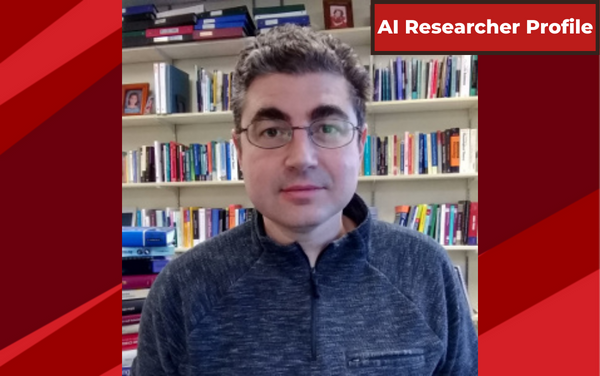
Dr. James DiCarlo's work explores whether these computer digital twin models of the brain could help guide safe, non- invasive ways to infl uence brain activity. In his talk, he explains how such a model could be used to design specific patterns of light. When this carefully designed light is added to what the eye naturally sees, it can precisely influence activity in groups of neurons in the inferior temporal cortex.

Since neural activity in this visual brain area may be connected to emotional states like anxiety, this research could eventually open the door to non-invasive approaches that may benefit mental well-being in the future.

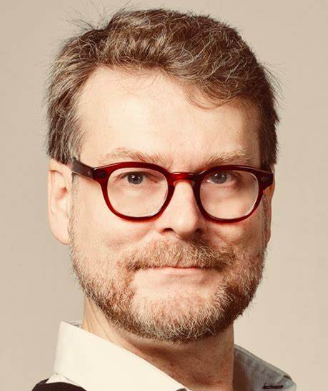
Speaker: James J. DiCarlo, MD, PhD, Peter de Florez Professor, MIT Brain and Cognitive Sciences, and Director, MIT Siegel Family Quest for Intelligence

Location: Staller Center Main Stage

The event will be livestreamed at stonybrook.edu/live

Abstract: Robot control has evolved from optimization-based controllers---precise but task-specific---through deep reinforcement learning's learned policies, to Vision-Language-Action (VLA) models that leverage pretrained vision-language backbones for language-conditioned manipulation across diverse tasks.
Despite their promise, VLAs exhibit a critical limitation: they function primarily as trajectory learners rather than skill learners. Recent evaluations reveal that VLAs often fail when faced with even minor variations in object initialization or environmental conditions, suggesting they memorize specific trajectories rather than acquiring generalizable manipulation skills. Attempts to address this through 3D spatial representations have shown limited success, indicating that the missing component may be more fundamental than geometric understanding alone.
This work argues that World Models (WMs)---internal representations that predict future states given actions---constitute the missing piece for robust VLA systems. We present one completed contribution and two ongoing investigations.
We developed a dual-layer world model for human-robot interaction that anticipates both physical scene evolution and latent human preferences for assistive tasks. Building on these foundations, we present ongoing work probing VLA internal representations to verify implicit world model existence, and propose a WM-VLA integration approach operating in the native visual domain through embedding prediction and image decoding.
Together, these contributions and investigations establish a foundation for WM-VLA systems, pointing toward robust, generalizable robot policies.
Speaker: Jason Qin
Location: NCS 220
Abstract: The rapid growth of observational data presents unprecedented opportunities to enhance both the predictability and mechanistic understanding of Earth systems. However, fully harnessing big Earth data needs computational frameworks that bridge the gap between physics-based models and machine learning. In this talk, I will first demonstrate how AI methods can significantly improve the prediction of environmental systems. Despite their predictive accuracy, machine learning models often lack physical interpretability, limiting their ability for scientific inquiry. To address this, I will introduce the developed hybrid, differentiable modeling framework that unifies physical models with machine learning in an end-to-end trainable system. This framework autonomously learns from large observations while maintaining physical clarity. The machine learning components can be seamlessly embedded into physical backbones to assimilate multi-source data, support automatic parameterization, and represent uncertain processes. I will showcase applications of this framework in simulating and understanding the terrestrial water cycle and its interactions with ecosystems at continental and global scales. This talk will highlight how differentiable modeling not only improves the modeling ability in both data-rich and data-scarce scenarios, but also provides a systematic pathway to enhancing model structures, deciphering uncertain physical relations, and facilitating knowledge discovery in Earth system sciences.


IACS Seminar Speaker: Dapeng Feng, Stanford Univeristy

Location: IACS Seminar Room
The Stony Brook Computing Society presents an exciting event featuring experts from Google (Danny Rosen - Technical Program Manager) and NVIDIA (Veer Mehta - Senior Solutions Architect), diving into the latest developments in generative AI. Learn how these industry leaders are shaping the future of technology and explore new ideas in a relaxed, engaging setting.

📍 Location: Frey 102
đź“… Date: Monday, Nov 11
⏰ Time: 12 PM - 1:50 PM

Scan the QR code or register in the link.

As part of a grant project funded by the AI3 Institute, a group of instructors participated in a faculty development program, Fostering Writing-to-Learn Skills with Critical AI Literacy: A Faculty Development and Student Support Program. This program was developed to support instructors across campus with navigating/integrating AI in their courses specifically around writing intensive/involved assignments. We would like to invite anyone interested to the culmination of this program, a mini-symposium, where the participants will share practical changes they made or are making around writing intensive/involved assignments and AI.

Location: Wang 201

A light lunch will be served. Please register by Friday, November 7th.

Abstract: The capacity to adapt machine learning models to various contexts, information, and objectives is particularly valuable. In this thesis, I focus on developing Class Conditional Guided Models. These are models that can be adaptively biased towards a class of interest via a conditional input. My primary focus lies in the efficiency of these models. They are constructed to require training only once, with the ability to quickly and conveniently adapt during testing time without necessitating fine-tuning or retraining.
Firstly, I propose RelationVAE, a novel generative model designed for few-shot scenarios, utilizing the prior knowledge of class similarity relationships. RelationVAE is designed to condition on the embeddings of the neighbor classes (i.e. classes with similarity relationships), to generate more reliable samples by making them more similar to the neighbor class. This enables adaptation of the generative model to the provided prior knowledge about class relationships.
As a second focus, I introduce scGAN, a shadow segmentation technique that enables adaptation to varying shadow distributions in different testing environments. scGAN is designed to condition on a sensitivity parameter, a scalar, to control the amount of the shadow detected. In the testing phase, the parameter is set to appropriate values, allowing the model to quickly adapt to specific test environments.
In my third contribution, I propose S-SEG, a methodology for fine-grained counting allowing adaptation to different granularities of fine-grained classes. In fine-grained problems, the distinction between classes is subtle and inconsistent across images, leading to variations in the granularity of the target class from one image to another. S-SEG is designed to be conditioned on an additional input, the sensitivity parameter, to control the granularities of the target class during inference.
My fourth contribution is a text-to-image synthesis method which allows controlling the number of the generated objects of a target class. I propose to generate an intermediate condition, the density map, which reflects the number of objects, together with their layout. This intermediate condition is used to effectively guide the generative model to generate objects with accurate counts.

Speaker: Vu Nguyen

Zoom: https://stonybrook.zoom.us/j/97114455337?pwd=Z4rB9dWcstlahUIs8PRrvQ9b2ZK2Df.1
Meeting ID: 971 1445 5337
Passcode: 272300

Jerome Liang, PhD 

Professor of Radiology, Biomedical Engineering, Electric and Computer Engineering, and Computer Science 

Co-Director of Research 

Department of Radiology 


Artificial intelligence, machine learning and computer-aided diagnosis in cancer Imaging 

February 11, 2021 

12:00pm - 1:00pm 

Virtual Seminar - Zoom 

https://stonybrook.zoom.us/j/98155629970?pwd=YzRvcnJnTlNTT1E5ak1oZEJvWTZHQT09 

Meeting ID: 981 5562 9970 

Passcode: 950410 

Host: 

Wei Zhao, PhD 

Professor of Radiology and Biomedical Engineering 

Educational Objectives  

Upon completion, participants should be able to:  

(1) Learn different medical image representations of cancer attributes, such as heterogeneity, high tendency to grow, etc.  

(2) Learn how computer (machine) can be trained (or programmed) to recognize the image representations.  

(3) Learn how artificial intelligence can drive the machine learning to maximize the performance of computer-aided diagnosis (CADx).  

Disclosure Statement  

In compliance with the ACCME Standards for Commercial Support, everyone who is in a position to control the content of an educational activity provided by the School of Medicine is expected to disclose to the audience any relevant financial relationships with any commercial interest that relates to the content of his/her presentation.  


The speaker, Jerome Liang, PhD, the planners; and the CME provider have no relevant financial relationship with a commercial interest (defined as any entity producing, marketing, re-selling, or distributing health care goods or services consumed by, or used on, patients), that relates to the content that will be discussed in the educational activity.  


CONTINUING MEDICAL EDUCATION CREDITS  

The School of Medicine, State University of New York at Stony Brook, is accredited by the Accreditation Council for Continuing Medical Education to provide continuing medical education for physicians.  


The School of Medicine, State University of New York at Stony Brook designates this live activity for a maximum of 1.0 AMA PRA Category 1 Credits™. Physicians should only claim credit commensurate with the extent of their participation in the activity.  


Should you be logging in Zoom by using your tablet or mobile device, please be sure to add your Full Name and/or Email for CME credit.