How to Do Spectral Learning at Scale for Science and Engineering

Abstract: Spectral decompositions such as singular value decompositions (SVDs) and eigenvalue decompositions (EVDs) are central tools across a vast swath of scientific computing and machine learning, with abundant engineering applications. Yet many modern methods for learning such decompositions in high dimensions struggle with instability, bias, and poor scalability, even when approximation power is not the limiting factor. I argue that these difficulties are not intrinsic to spectral problems, but instead arise from a shared reliance on Rayleigh-quotient-based constrained optimization, which forces explicit orthogonality handling through penalties, normalization, or whitening.
To address these challenges, I present a reformulation based on unconstrained variational objectives that implicitly encode spectral structure, eliminating the need for orthogonalization and ad-hoc regularization. This perspective leads to a conceptually simpler and scalable parametric framework for learning ordered spectral representations via nested optimization. The resulting framework is well matched to diverse settings in science and engineering. As examples, I demonstrate its effectiveness on eigenvalue problems for linear PDEs such as the Schrödinger equation, spectral (Koopman) analysis of nonlinear dynamical systems such as molecular dynamics, and structured representation learning with deep neural nets. Collectively, these examples illustrate how abandoning Rayleigh-quotient-based formulations resolves long-standing optimization pathologies across domains.

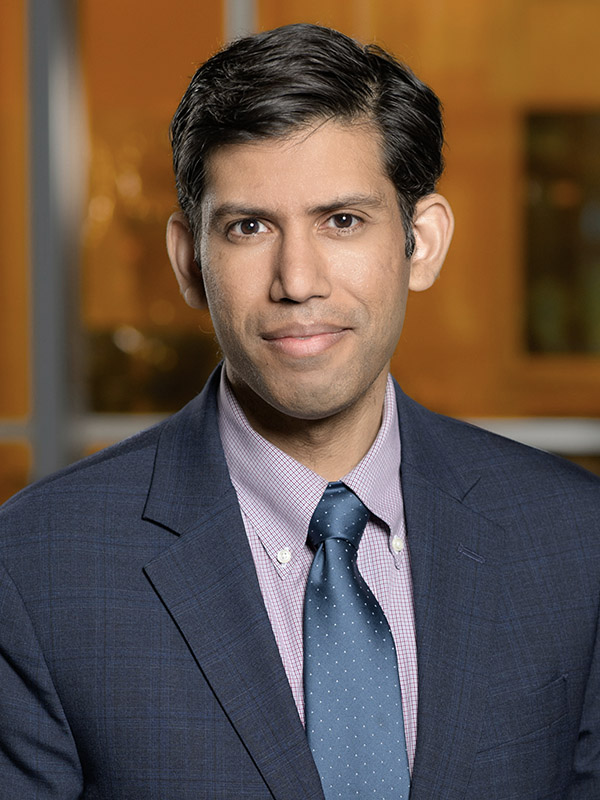
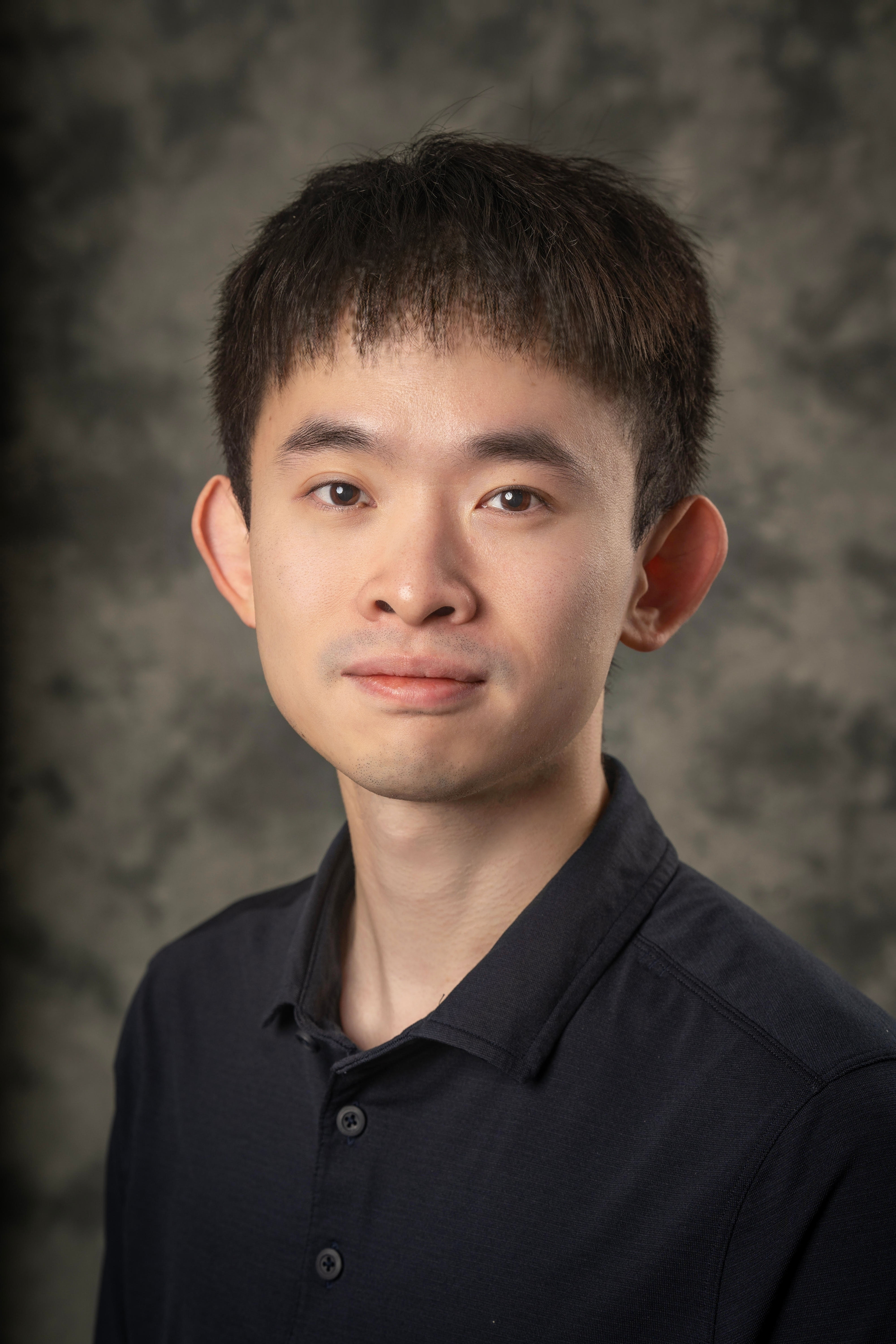
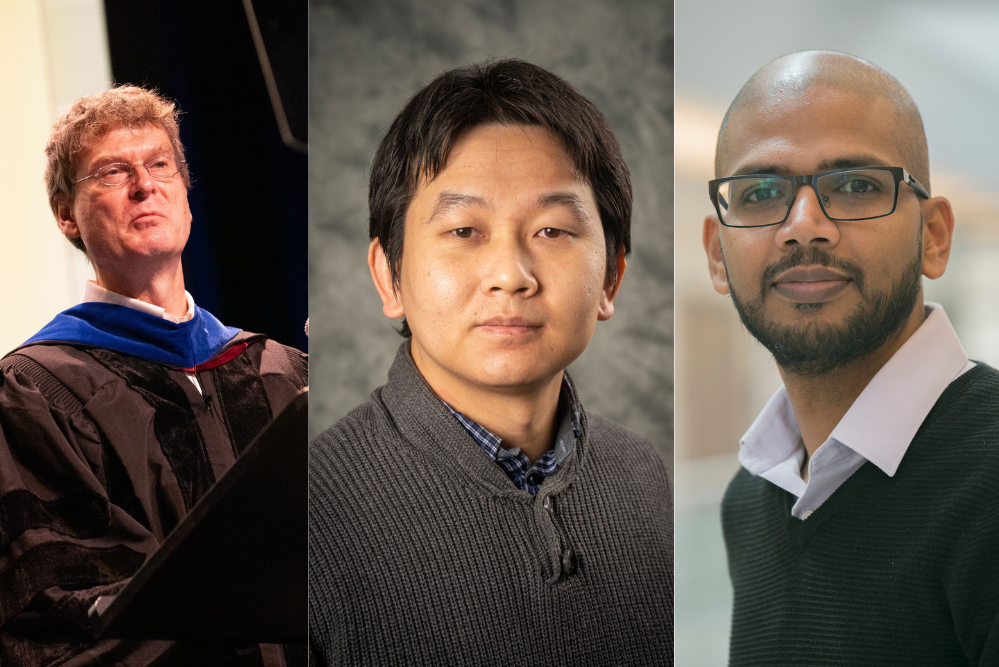
Bio: Jongha (Jon) Ryu is a postdoctoral associate at MIT EECS. He received his Ph.D. in Electrical and Computer Engineering from UC San Diego. His research develops statistical and mathematical foundations for scientific machine learning, with a focus on scalable spectral methods, efficient generative modeling, and reliable uncertainty quantification for scientific and engineering systems.

Location: NCS 120
CSE 656 Seminars in Computer Vision - Wednesdays 11:30am-12:50pm, Room NCS 120

The overall purpose of this seminar is to bring together people with interests in Computer Vision theory and techniques and to examine current research issues. This course will be appropriate for people who already took a Computer Vision graduate course or already had research experience in Computer Vision. To enroll in this course, you must either: (1) be in the PhD program or (2) receive permission from the instructors.

Each seminar will consist of multiple short talks (around 10 minutes) by multiple people. Students can register for 1 credit for CSE656. Registered students must attend and present a minimum of 2 or 3 talks. Everyone else is welcome to attend. Fill in https://forms.gle/pCVXovgfMfQwGqG38 to subscribe to our mailing list for further announcement.

Stony Brook University Libraries invites students, faculty, & staff to join a conversation about how AI is transforming the private sector workforce. As AI tools move from experimentation to everyday business use, companies are rethinking roles, skill sets, leadership, and long-term strategy. This discussion-based event will focus on the fast-paced changes and directions at tech companies and their possible impact. This event will be particularly relevant for students preparing for an AI influenced job market and how to position themselves for opportunities in a rapidly evolving professional landscape.

The discussion will be led by Tariq Khan, Senior Director of Private Cloud Solutions at Hewlett Packard Enterprise. Tariq is a technology leader and architect with experience across private cloud, hybrid cloud, and data center platforms. He is responsible for shaping the technology architecture and strategic direction of HPE's Private Cloud offerings across on premises and cloud integrated environments.

Light refreshments will be served.


Location: Melville Library, NRR, Learning Lab

You are cordially invited to attend the biweekly Brookhaven AI Mixer (BAM). BAM includes one short talk on AI research happening at BNL, followed by an open mixer over coffee and snacks for everyone to network and discuss all things AI. The first half hour will consist of presentations that will be available via ZOOM, and the second half hour will be for in person only networking.

Join us every other Tuesday at noon in CDSD's Training Room (building 725, 2nd floor) to learn about interesting AI methods and applications, engage with potential collaborators, prepare for pending FASST funding calls, and build a community of AI for Science at BNL.

AI for Neutrino Oscillation Fits

Abstract: Neutrino oscillation experiments face the problem of performing likelihood fits in a very highdimensional space to extract the oscillation parameters from measured spectra. The current strategy for this is to fix all but a few parameters, reducing the dimensionality of the fit to a manageable number, but this risks missing correlations between the parameters, which can impact the systematics of the measurement. This is an area where artificial intelligence and machine learning could make great improvements. I will discuss the problem, explain how it is currently dealt with, and sketch one possible way of implementing AI to solve it, using a sampling method combining Smolyak's algorithm, for efficient sampling using sparse grids, with an adaptive grid refinement to increase sampling in regions that are more likely to contain the global minimum.

Speaker: Steven Linden is a physicist in the Instrumentation Department at BNL working on neutrino and dark matter experiments. He got his PhD from Yale in 2010 doing analysis on the MiniBooNE experiment and then worked on various dark matter detectors (MiniCLEAN, Pico, SENSEI) at SNOLAB in Canada for nearly ten years before moving to BNL.

Location: CDS, Bldg. 725, Training Room

Join ZoomGov Meeting: https://bnl.zoomgov.com/j/1614473319?pwd=e4QSSgFHqDzHx870ixJpwuG3yqBere.1

Meeting ID: 161 447 3319
Passcode: 733283

Abstract: Materials used in extreme environments, such as high temperatures, irradiation, and stress, often fail due to rapid defect generation and microstructural evolution, and traditional approaches cannot explore the vast design space needed for next-generation alloys. I will present a machine learning framework powered by massive computing that links individual atomic motion to microstructural evolution. Neural network kinetics models trained on first-principles data map vacancy barrier spectra and capture correlated diffusion in multicomponent alloys, revealing design strategies to suppress radiation damage. At larger scales, simulations uncover dislocation patterning and distinguish between confined and extended slip bands, offering new insight into collective dislocation motion and deformation instabilities. By integrating AI-driven modeling, large-scale computing, and experimental validation, my research goal is to accelerate the discovery of damage-tolerant materials and advance fundamental understanding of defect physics in extreme environments.

Speaker Bio: Penghui Cao is an Associate Professor in Mechanical and Aerospace Engineering at the University of California, Irvine, with a joint appointment in Materials Science and Engineering. He received his PhD in mechanical engineering from Boston University and subsequently worked as a Postdoctoral Associate in the Department of Nuclear Science and Engineering at the Massachusetts Institute of Technology from 2014 to 2018. Dr. Cao's research focuses on understanding the fundamental mechanisms that govern radiation responses and microstructure evolution in materials, and on developing advanced alloys for high-performance nuclear energy systems. His lab advances computational and modeling algorithms, integrates advanced manufacturing techniques to tailor microstructures, and leverages state-of-the-art electron microscopy to characterize and assess underlying mechanisms. He is the recipient of the DOE Early Career Research Program Award and the UCI Samueli School's Mid-Career Award for Faculty Excellence in Research.

Location: Institute for Advanced Computational Science, Seminar Room

*This seminar will be held in-person and online. Zoom link below*

Join Zoom Meeting: https://stonybrook.zoom.us/j/96410717491?pwd=3WGMwbLYNMSbI2IF160VXkvv2JmCQ1.1

Meeting ID: 964 1071 7491
Passcode: 399333

Description:

Curious about what AI image generation tools are out there and how they work? Come down to the library Galleria space (outside the Central Reading Room) to see some demonstrations and learn more about them.

Librarians Chris Kretz and Ahmad Pratama, along with David Ecker of DoIT, will be hosting Explore AI demos from Monday - Wednesday this week on different topics. Whether you're new to AI or an experienced user, stop by and take a look!

Location: Library Galleria

Fall 2025, Mondays 2 to 3:20 pm, NCS 220 and Zoom link to be announced soon.

The seminar will be jointly taught by Prof. Dimitris Samaras samaras@cs.stonybrook.edu.

The overall purpose of this seminar is to bring together people with interests in Computer Vision theory and techniques and to examine current research issues. This course will be appropriate for people who already took a Computer Vision graduate course or already had research experience in Computer Vision.

To enroll in this course, you must either: (1) be in the Ph.D. program or (2) receive permission from the instructors.

Each seminar will consist of multiple short talks (around 15 minutes) by multiple students. Students can register for 1 credit for CSE656. Registered students must attend and present a minimum of 2 talks. Registered students must attend in person. Up to 3 absences will be excused. Everyone else is welcome to attend.

Learn how to prompt AI to help clean datasets and write formulas in Google Sheets.

When you have a messy dataset, it can take a lot of time to clean it up before you can start analyzing. Can AI help? In this workshop, we'll collect live data and then use Gemini AI (the stand alone tool) to help clean up the data. Then, we'll use it to help do some analysis. Because we'll be working with live data live in Gemini, we don't know exactly what will happen, but that's the reality of data and data cleaning!

In this session, you will

  1. Craft effective AI prompts to generate Google Sheets formulas for data analysis and manipulation
  2. Utilize Gemini to develop regular expression formulas to extract, reformat, clean text-based data
  3. Develop formulas for numerical analysis using Gemini AI

https://stonybrookuniversity.co1.qualtrics.com/jfe/form/SV_dht1o3rNzlZhHka?source=event+manager&session=0815250900sheets
The overall purpose of this seminar is to bring together people with interests in Computer Vision theory and techniques and to examine current research issues. This course will be appropriate for people who already took a Computer Vision graduate course or already had research experience in Computer Vision. To enroll in this course, you must either: (1) be in the PhD program or (2) receive permission from the instructors.

Each seminar will consist of multiple short talks (around 10 minutes) by multiple people. Students can register for 1 credit for CSE 656. Registered students must attend and present a minimum of 2 or 3 talks. Everyone else is welcome to attend. Fill in https://forms.gle/pCVXovgfMfQwGqG38 to subscribe to our mailing list for further announcement.
The overall purpose of this seminar is to bring together people with interests in Computer Vision theory and techniques and to examine current research issues. This course will be appropriate for people who already took a Computer Vision graduate course or already had research experience in Computer Vision. To enroll in this course, you must either: (1) be in the Ph.D. program or (2) receive permission from the instructors. Each seminar will consist of multiple short talks (around 15 minutes) by multiple students. Students can register for 1 credit for CSE656. Registered students must attend and present a minimum of 2 talks. Registered students must attend in person. Up to 3 absences will be excused. Everyone else is welcome to attend. The seminar will be taught by Prof. Chao Chen, chao.chen.1@stonybrook.edu.