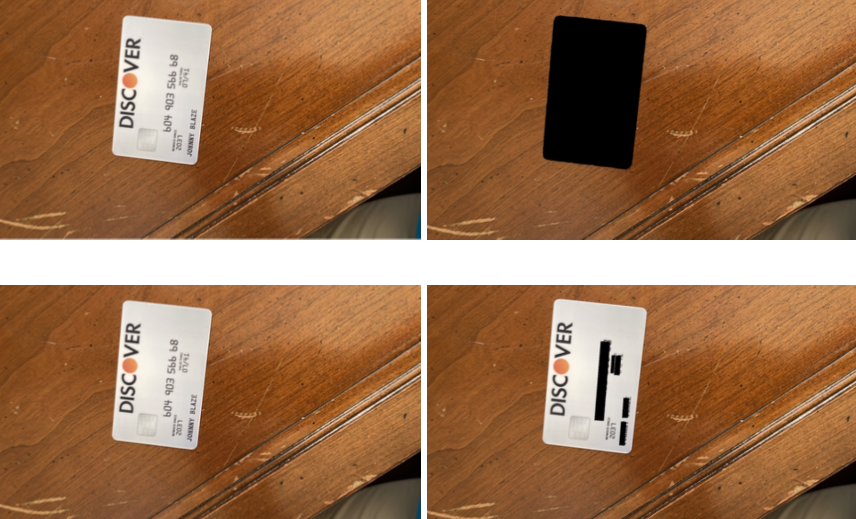
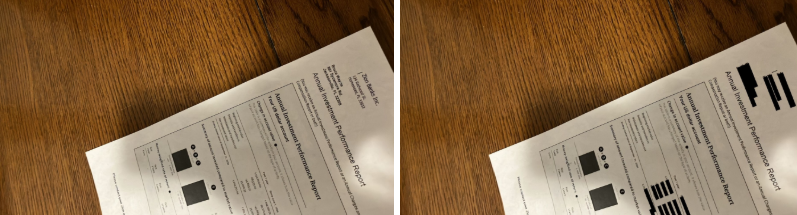
The Empirical Methods in Natural Language Processing (EMNLP) conference is a premier international academic conference in the field of artificial intelligence and natural language processing (NLP). Organized annually by the Association for Computational Linguistics (ACL) special interest group on linguistic data (SIGDAT), it focuses on research that uses empirical methods to solve language processing problems.

For more information, and registration, visit the official website.

You are cordially invited to attend the biweekly Brookhaven AI Mixer (BAM). BAM includes one short talk on AI research happening at BNL, followed by an open mixer over coffee and snacks for everyone to network and discuss all things AI. The first half hour will consist of presentations that will be available via ZOOM, and the second half hour will be for in person only networking.

Abstract: Two-dimensional (2D) materials such as graphene, hBN, and TMDs offer atomically sharp interfaces and unprecedented tunability when vertically assembled into van der Waals heterostructures. These stacks have enabled discoveries ranging from moiré superconductivity and correlated insulators to quantum emitters and next-generation nanoelectronic devices. Yet constructing high-quality heterostructures remains largely artisanal: researchers manually identify exfoliated flakes, align a polymer stamp by eye, and finely adjust temperature and contact geometry through tacit skill. This manual workflow is difficult to reproduce, scales poorly, and prevents systematic exploration of the enormous combinatorial space of materials, twist angles, and interfacial conditions. AutoLab is an autonomous platform that translates this tacit human expertise into programmable, feedback-driven control. Instead of pressing flakes with predefined trajectories, AutoLab uses machine vision to detect polymer-wafer contact, dynamically regulates contact evolution through closed-loop actuation and temperature control, and captures high-quality flakes with the cleanliness and precision of expert manual fabrication. The system integrates perception, decision making, and motion planning into a single robotic framework, enabling reproducible stacking, wafer-level coverage, and accelerated discovery. Beyond 2D materials, AutoLab illustrates a broader paradigm for AI-native scientific automation: codifying human experimental reasoning into algorithms that interrogate data in real time, adaptively adjust instrumentation, and generate scalable, high-fidelity datasets. Such platforms could generalize to diverse research domains--quantum device fabrication, optical alignment, surface science, autonomous microscopy, and other workflows where expert intuition currently limits throughput and reproducibility. By bridging artisanal manipulation and robotic autonomy, AutoLab points toward a future where scientific discovery is accelerated by machines that not only execute instructions, but learn, respond, and collaborate with human scientists.

Biography: Dr. Yutao Li is a research associate from Department of Condensed Matter Physics and Material Science, Brookhaven National Laboratory. He has 8 years of experience in 2D material sample fabrication, and investigation in their electronic transport, optical and mechanical properties.

Join us every other Tuesday at noon in CDSD's Training Room (building 725, 2nd floor) to learn about interesting AI methods and applications, engage with potential collaborators, prepare for pending FASST funding calls, and build a community of AI for Science at BNL.

Location: CDS, Bldg. 725, Training Room

Join ZoomGov Meeting: https://bnl.zoomgov.com/j/1604383624?pwd=ffQ5cUPNxTI7nzClKQO6cnsNbhF9Vf.1

Meeting ID: 160 438 3624
Passcode: 558449

CSE 656 Seminar in Computer Vision The overall purpose of this seminar is to bring together people with interests in Computer Vision theory and techniques and to examine current research issues. This course will be appropriate for people who already took a Computer Vision graduate course or already had research experience in Computer Vision. To enroll in this course, you must either: (1) be in the PhD program or (2) receive permission from the instructors. Each seminar will consist of multiple short talks (around 15 minutes) by multiple students. Students can register for 1 credit for CSE656. Registered students must attend and present a minimum of 2 talks. Everyone else is welcome to attend. Fill in https://forms.gle/q6UG9ygauLp2a8Po8 to subscribe to our mailing list for further announcement.

What AI tools are available to help with the scholarly research process? Are they helpful? What do they do and is it worth the time and energy to try them out? Join librarian Christine Fena to explore and compare established and emerging AI research tools such as Elicit, Scite, Consensus, and Undermind. The workshop will not offer a lengthy tutorial on how to use any of these tools, but will provide a starting point to understanding what they are, what new ones are emerging, and how AI research assistants might bring changes to your search process. All are welcome!

Register for this Zoom workshop.

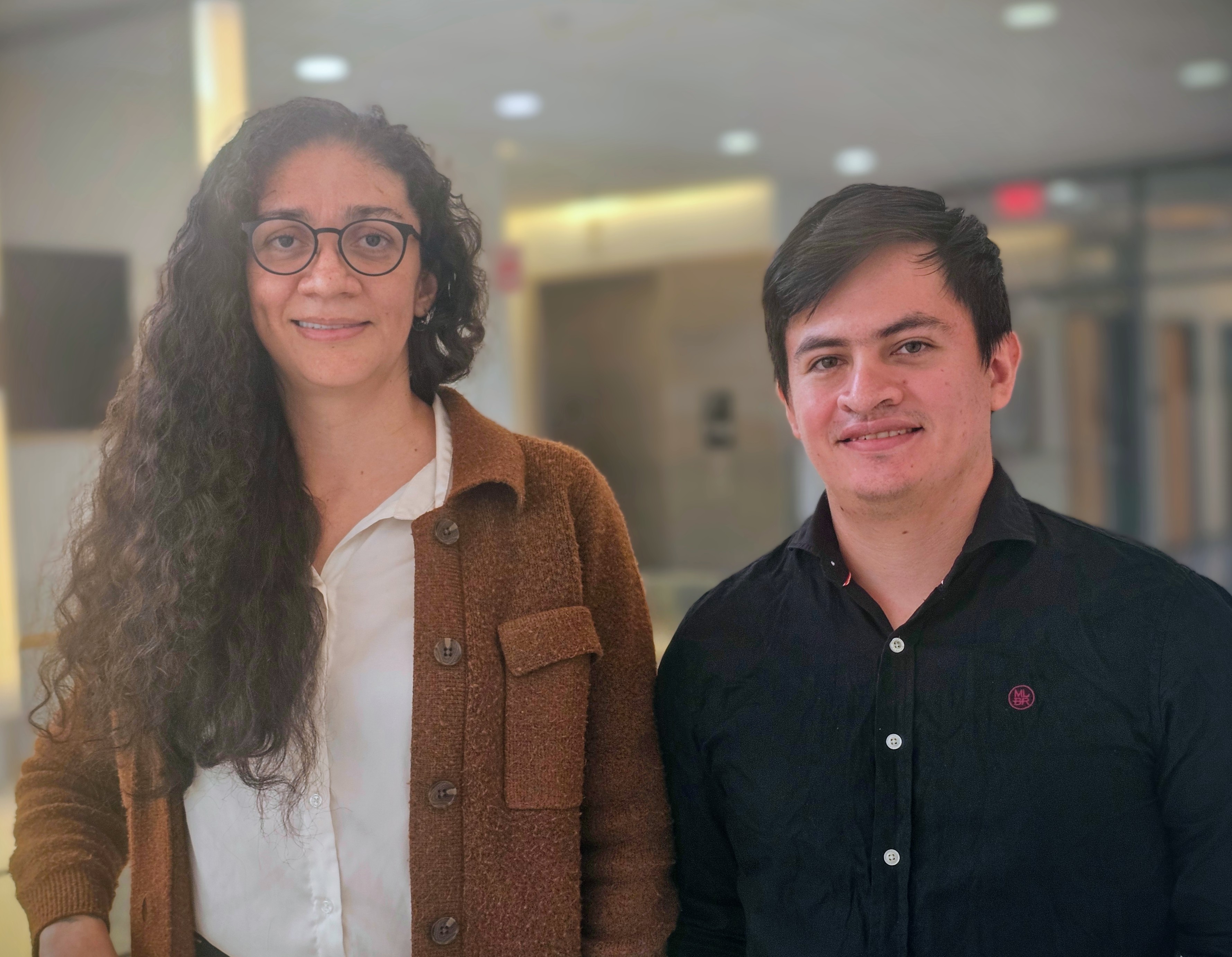
Join Klaus Mueller, professor of computer science and interim chair of the Department of Technology and Society, as he hosts Sucheta Lahiri.

Lahiri leads the AI Ethics and Risk Management function at Oxy, where she is responsible for ensuring that the company's AI solutions are developed and deployed in a manner that is ethical, efficient, trustworthy, safe, sustainable, and human-centered. She holds a doctorate from Syracuse University, along with two master's degrees in Applied Statistics and Information Science earned in India.

Zoom: https://stonybrook.zoom.us/j/7851507944?omn=98268154363#success


Abstract: The current approach to materials design, driven by strategic experimentation and supported by physics-based simulation across relevant scales, has been the standard for decades. While the theoretical component in this workflow provides valuable understanding of material behavior, it often fails to deliver actionable guidance for implementation. Advances in artificial intelligence and machine learning (AI/ML), together with high-performance computing (HPC), now offer a viable pathway to close this gap and accelerate both discovery and process optimization. This presentation will outline practical approaches for integrating AI/ML with HPC-enabled, high-throughput computation to explore high-dimensional search spaces. Examples will include the development of engineering alloys for extreme environments, the use of neural networks to rapidly improve computational thermodynamic models, and vapor processing optimization for the manufacturing of ultra-high-temperature ceramics. I will highlight how scientific insight and domain expertise remain essential for translating surrogate model predictions into impactful outcomes. Finally, I will conclude with current challenges and future opportunities for AI/HPC-driven materials research.

Speaker: Dongwon Shin
This seminar will be held in person and online

Join Zoom Meeting: https://stonybrook.zoom.us/j/93730374357?pwd=YDLJ7ELqOQnTZEQhlN8Pa4TuhaiFK8.1
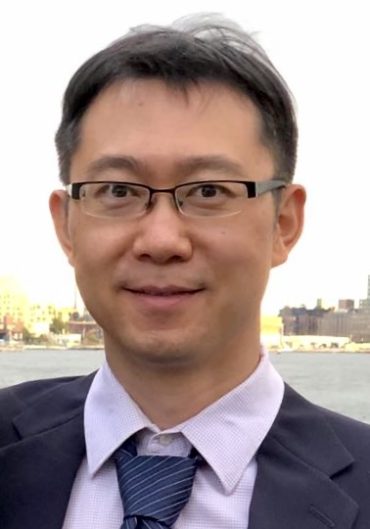
CSE 600 Talk: Haibin Ling - Computer Vision Research and Applications


Abstract: Having been intensively studied over half a decade, computer vision has evolved as a broad research area and become mature in many applications. In this talk, we will summarize our work in computer vision in both core vision topics and application-oriented ones. In particular, for core vision problems, we will report studies on visual tracking, visual matching and visual detection; for applications, we will describe our work on medical image analysis, intelligent transportation, smart projector systems and preliminary work on material property prediction.

Bio: Haibin Ling received the BS and MS degrees from Peking University in 1997 and 2000, respectively, and the PhD degree from the University of Maryland, College Park, in 2006. From 2000 to 2001, he was an assistant researcher at Microsoft Research Asia. From 2006 to 2007, he worked as a postdoctoral scientist at the University of California Los Angeles. In 2007, he joined Siemens Corporate Research as a research scientist. From 2008 to 2019, he worked as a faculty member of Temple University. In fall 2019, he joined the Department of Computer Science of Stony Brook University where he is currently a SUNY Empire Innovation Professor. His research interests include computer vision, augmented reality, medical image analysis, and human computer interaction. He received the Best Student Paper Award at the ACM UIST in 2003, and the NSF CAREER Award in 2014. He serves as Associate Editor for several journals including IEEE Trans. on Pattern Analysis and Machine Intelligence (PAMI), Pattern Recognition (PR), and Computer Vision and Image Understanding (CVIU). He has served or will serve as Area Chair for CVPR 2014, 2016, 2019 and 2020.