You are cordially invited to attend the biweekly Brookhaven AI Mixer (BAM). BAM includes three short talks on AI research happening at BNL, followed by an open mixer over coffee and snacks for everyone to network and discuss all things AI. The first half hour will consist of presentations that will be available via ZOOM, and the second half hour will be for in person only networking.

Join us every other Tuesday at noon in CDSD's Training Room (building 725, 2nd floor) to learn about interesting AI methods and applications, engage with potential collaborators, prepare for pending FASST funding calls, and build a community of AI for Science at BNL.

Tuesday, November 12, 2024, 12:00 pm -- CDS, Bldg. 725, Training Room

Speakers

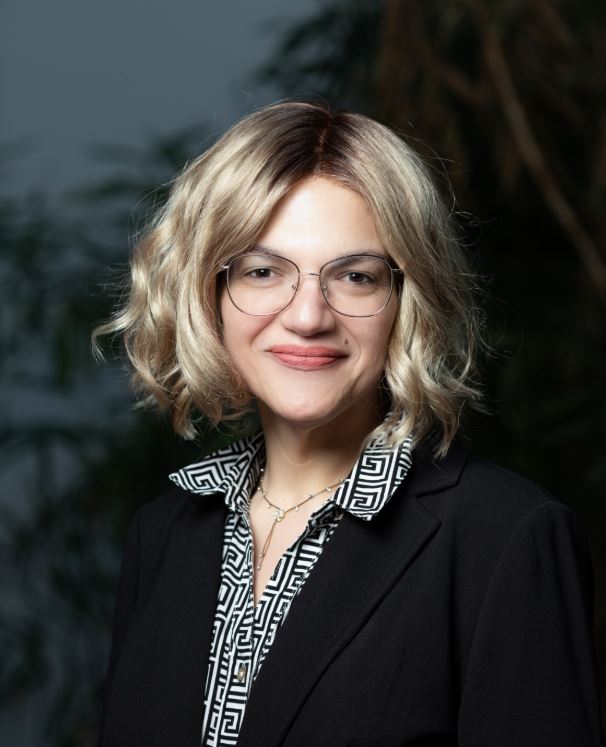
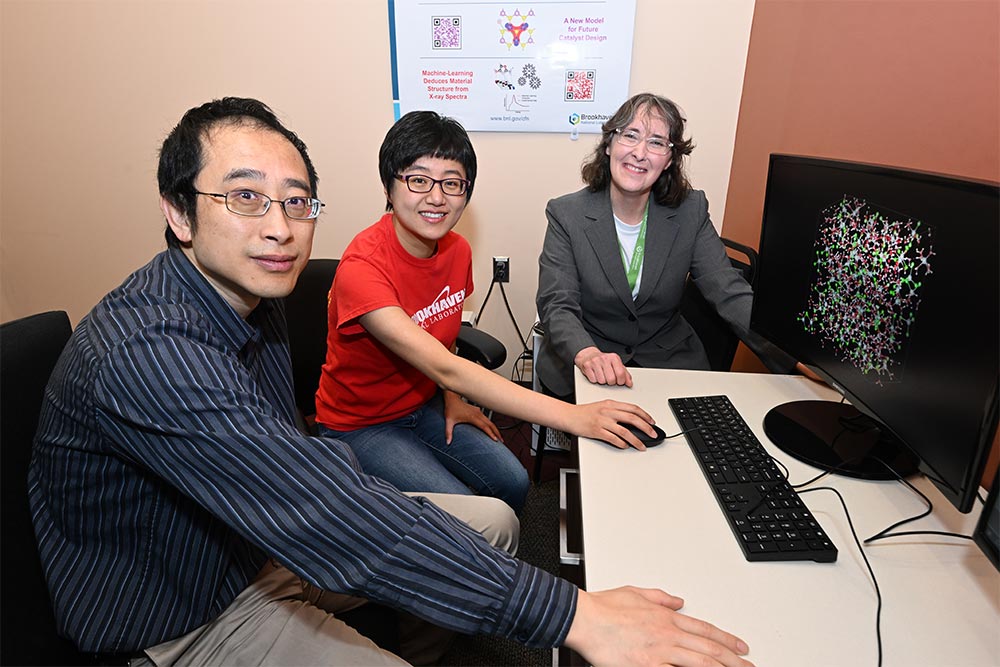
Carlos Soto, CDS

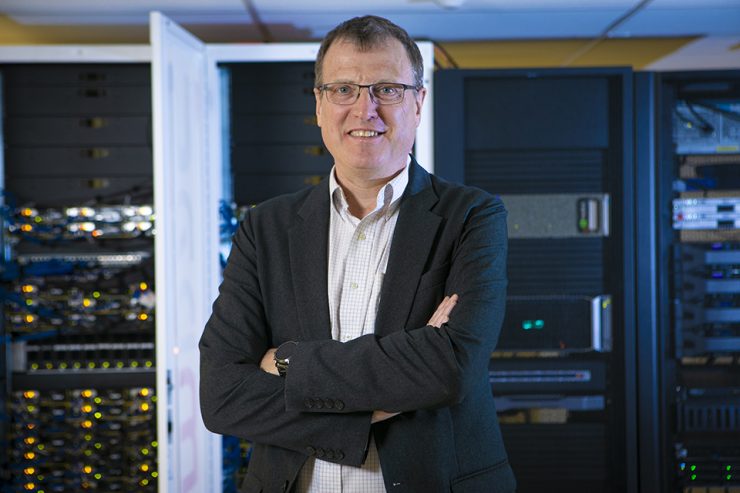
Yi Huang, CDS

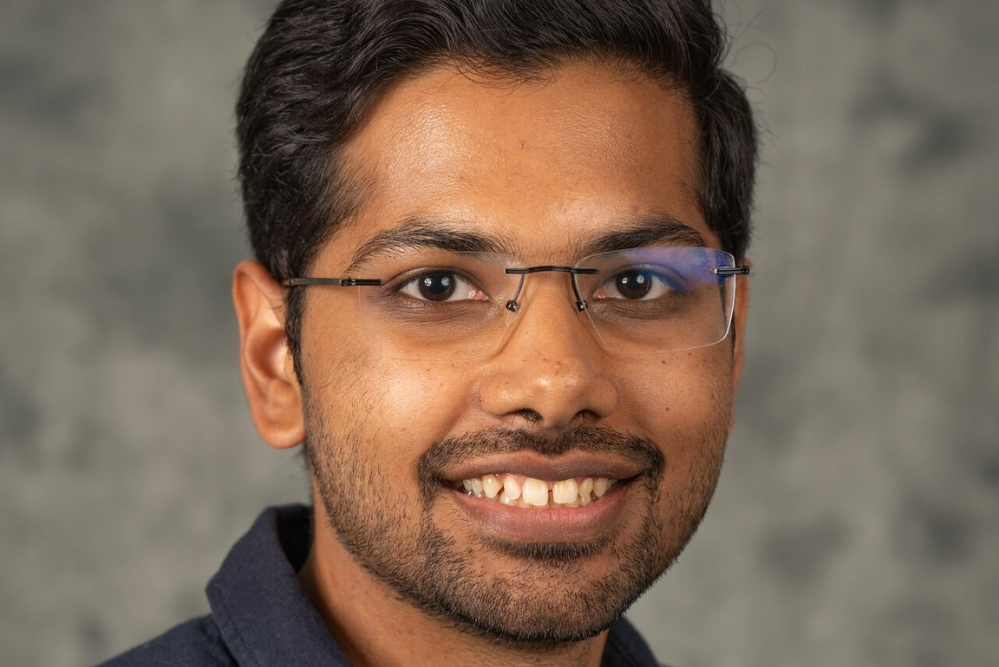
Kevin Yager, CFN

CSE 600 Seminar Series | Fall 2025


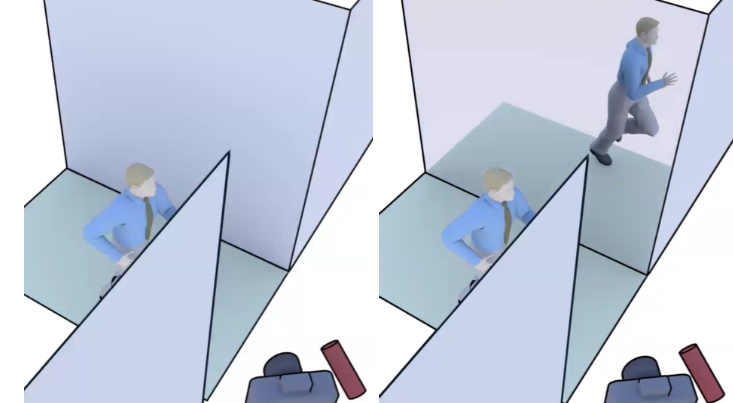
Abstract: Virtual worlds are prevalent in applications ranging from entertainment, healthcare, retail, to workforce training. With the demand for virtual content growing exponentially, the market for such content is valued at over $200 Billion, which is accelerating the need for advanced computational solutions. In this talk, I will focus on a key challenge in virtual content creation: simulating autonomous agents.
I begin by overviewing this problem domain, through the lens of a physics-based dynamics simulation, which enables the simulation of thousands of agents at interactive rates with GPU programming, achieving a level of performance previously unattainable.
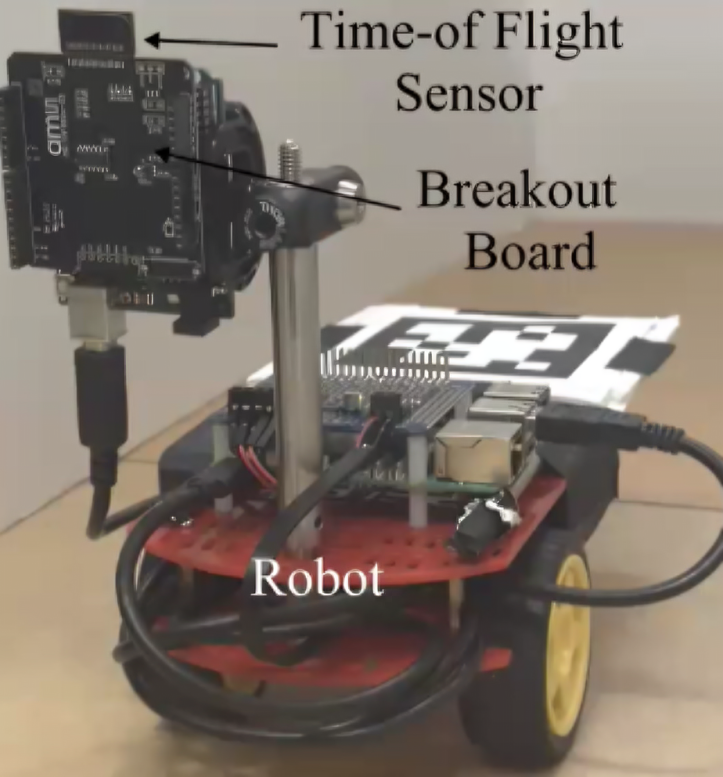
Next, I'll present our recent results in Deep Reinforcement Learning for multi-agent navigation, which enable refined, reward-based strategies to control agent movement. We demonstrate how these techniques can simulate realistic crowds, with broad applications in pedestrians, robots, and swarms. Lastly, I conclude my talk by discussing our lab's work-at-large and the wide range of research opportunities in this emerging area.

Speaker: Tomer Weiss is a professor with New Jersey Institute of Technology since 2020. He received the best student, presentation, and best paper awards in various ACM SIGGRAPH conferences for his work on simulating multi-agent crowds. He was also a finalist in both ACM SIGGRAPH Thesis Fast Forward, and the ACM SIGGRAPH Asia Doctoral Symposium in 2018. He received his PhD in computer science from UCLA in 2018. His research interests include multi-agent dynamics, scene understanding, and interactive visual computing.
CG Group member (and SBU faculty) Chao Chen will speak on Fri, March 12, about the use of topological data analysis in machine learning for image analysis.
Chao has shared some of his research with the CG Group previously, and this will be a great opportunity to learn more about this exciting research area related to computational geometry/topology!

Time: Friday, March 12, 2pm-3pm
Place: Zoom
https://stonybrook.zoom.us/my/profweizhu?pwd=RjVIVXg3YUhudzZZQ3pheHUydTJBUT09


Title: Learning with Topological Information - Image Analysis and Label Noise
Speaker: Prof. Chao Chen (SBU)

Abstract: Modern machine learning faces new challenges. We are
analyzing highly complex data with unknown noise. Topology provides
novel structural information to model such data and noise. In this
talk, we discuss two directions in which we are using topological
information in the learning context. In image analysis, we propose a
topological loss to segment and to generate images with not only
per-pixel accuracy, but also topological accuracy. This is necessary
in analysis of images of fine-scale biomedical structures such as
neurons, vessels, etc.  Extracting these structures with correct
topology is essential for the success of downstream
analysis. Meanwhile, we discuss how to use topological information to
train classifiers robust to label noise. This is important in practice
especially when we are using deep neural networks which tend to
overfit noise. These results have been published in NeurIPS, ECCV,
ICML and ICLR.

Abstract: Implicit functions have long been a fundamental representation for both 2D and 3D objects in computer graphics, playing a significant role in the field's early development. With the rise of 3D deep learning and the rapid advancement of neural rendering techniques, implicit representations of 3D shapes have regained significant attention in recent years. In this talk, I will present several recent research projects focusing on implicit function-based 3D reconstruction and neural rendering. Furthermore, I will discuss potential future developments in this dynamic and rapidly evolving field.

Biography: Ying He is an Associate Professor at the College of Computing and Data Science, Nanyang Technological University, where he also serves as the Director of the Centre for Augmented and Virtual Reality. His research interests lie in geometric computation and analysis, with applications spanning computer graphics, 3D vision, computer-aided design, multimedia, and wireless sensor networks. Dr. He is an active member of the technical program committees for major conferences on geometric modeling and has served on the editorial boards of IEEE Transactions on Visualization and Computer Graphics, Computer Graphics Forum, and Computational Visual Media. He has also taken on key leadership roles as General/Program Co-Chair for several conferences, including Shape Modeling International (SMI) 2022, Solid and Physical Modeling (SPM) 2022 & 2023, Geometric Modeling and Processing (GMP) 2014 & 2021, and Computational Visual Media (CVM) 2020. For more information, please visit https://personal.ntu.edu.sg/yhe/

Location: NCS 115


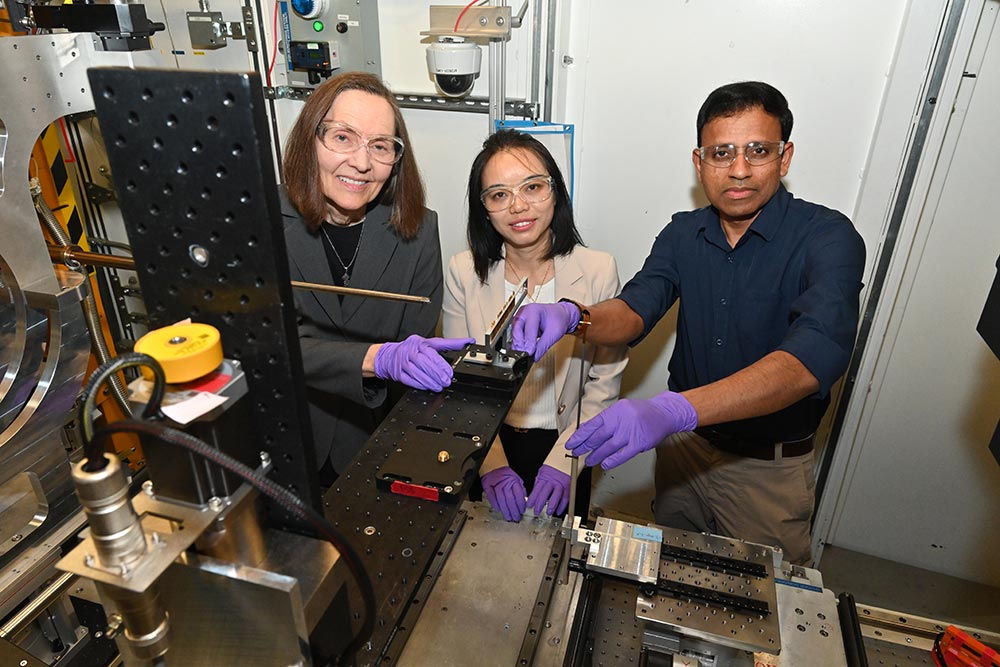
Abstract: The current approach to materials design, driven by strategic experimentation and supported by physics-based simulation across relevant scales, has been the standard for decades. While the theoretical component in this workflow provides valuable understanding of material behavior, it often fails to deliver actionable guidance for implementation. Advances in artificial intelligence and machine learning (AI/ML), together with high-performance computing (HPC), now offer a viable pathway to close this gap and accelerate both discovery and process optimization. This presentation will outline practical approaches for integrating AI/ML with HPC-enabled, high-throughput computation to explore high-dimensional search spaces. Examples will include the development of engineering alloys for extreme environments, the use of neural networks to rapidly improve computational thermodynamic models, and vapor processing optimization for the manufacturing of ultra-high-temperature ceramics. I will highlight how scientific insight and domain expertise remain essential for translating surrogate model predictions into impactful outcomes. Finally, I will conclude with current challenges and future opportunities for AI/HPC-driven materials research.

Speaker: Dongwon Shin
This seminar will be held in person and online

Join Zoom Meeting: https://stonybrook.zoom.us/j/93730374357?pwd=YDLJ7ELqOQnTZEQhlN8Pa4TuhaiFK8.1

Abstract: The advent of ChatGPT has redrawn the boundary of pedagogical discourse, where the dyadic configuration of teacher-student has, for many, become triadic -- one that includes AI as an relevant third party, not to be missed or dismissed. Within applied linguistics, AI-focused research has predominantly targeted the teaching and learning of writing (Fang & Han, 2025). The work on AI and speaking, on the other hand, has largely involved perception studies documenting its positive impact on learners' willingness to communicate (Goh & Aryadoust, 2025). In this talk, I explore the role of AI in the teaching and learning of speaking, and in particular, the development of interactional competence. Based on a corpus of learner-AI interactions, I demonstrate the ways in which ChatGPT excels and fails at acting as a useful conversation partner, with a view towards furthering our ongoing deliberation on the affordances and constraints of AI in language education.

Speaker: Hansun Zhang Waring (Teachers College, Columbia University)

Hansun Zhang Waring is Professor of Linguistics and Education at Columbia University and founder The Language and Social Interaction Working Group (LANSI). As an applied linguist and a conversation analyst, Hansun is interested in all things interaction -- (second language) pedagogical interaction, communication with the public, parent-child interaction, and human-AI interaction (HAI). Her work has appeared in leading journals in applied linguistics and discourse analysis as well as numerous book volumes, some of which she (co-)authored or co-edited. She is on the editorial boards of Chinese Language and Discourse (CLD), Classroom Discourse (CD), and International Review of Applied Linguistics (IRAL).

Location: Wang Center, Lecture Hall #1

If you need special accommodation, please contact chikako.nakamura@stonybrook.edu.

Join Stony Brook University's Center for Excellence in Learning and Teaching (CELT) for a bootcamp on how to use AI to enhance your teaching and courses. This event will demonstrate how ChatGPT, Microsoft Copilot, and other generative AI platforms can support you in crafting learning objectives, writing exam questions, composing rubrics, and designing course content such as lesson plans, in-class activities, instructional videos, and more.

Register here.