You are cordially invited to attend the biweekly Brookhaven AI Mixer (BAM). BAM includes three short talks on AI research happening at BNL, followed by an open mixer over coffee and snacks for everyone to network and discuss all things AI. The first half hour will consist of presentations that will be available via ZOOM, and the second half hour will be for in person only networking.

Join us every other Tuesday at noon in CDSD's Training Room (building 725, 2nd floor) to learn about interesting AI methods and applications, engage with potential collaborators, prepare for pending FASST funding calls, and build a community of AI for Science at BNL.

Tuesday, January 7, 2025, 12:00 pm -- CDS, Bldg. 725, Training Room


Speakers

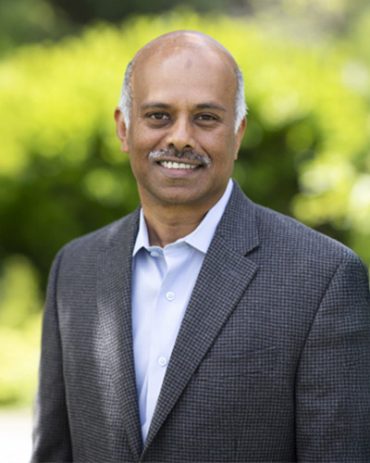
Sanket Jantre
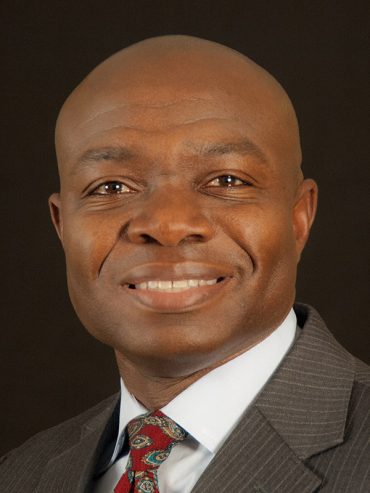
Tao Zhang
Xi Yu


Join ZoomGov Meeting: https://bnl.zoomgov.com/j/1615289117?pwd=Hqkbj9itxWrFnkhZ8rQXHPInO2gxdF.1

Meeting ID: 161 528 9117
Passcode: 991382

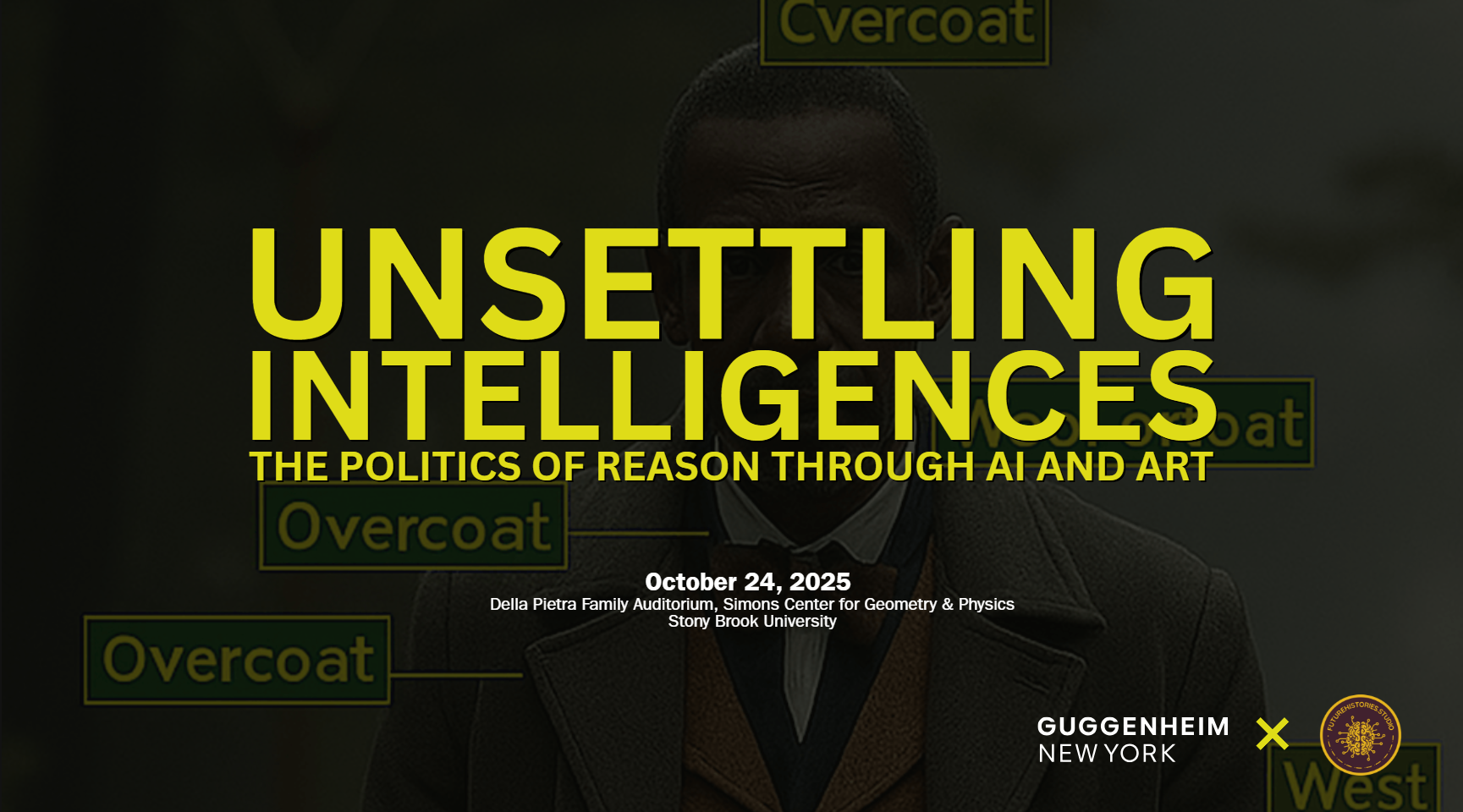
The Future Histories Studio welcomes Moontae Lee, LG AI Research.


Generative AI is transforming how we understand, create, and interact with information. Large Language Models (LLMS) comprehend contexts, answer non-trivial questions, and spark creative ideas. This talk introduces the evolution of these models, highlighting the most recent advancements in planning, reasoning, and evaluation. The talk also touches on the criticalconsiderations for both model developers and users, carefully addressing limitations of LLMs as well as ethical and societal implications. Finally, the talk provides ongoing directions in researchand production: from the rise of personalized AI agents to the future frontiers of AI.

Moontae Lee is the Director of the Superintelligence Lab at LG AI Research and an Assistant Professor of Information and Decision Sciences at the University of Illinois Chicago. His journey with Large Language Models began as a visiting scholar at Microsoft Research in 2019, continuously consulting the Deep Learning Group at Redmond until joining LG. He holds a PhD in Computer Science from Cornell, an MS from Stanford, and BS degrees in Computer Science, Mathematics, and Psychology from Sogang University. He has been an area chair for major AI conferences and earned recognition in Operations Research and Computational Social Science, including awards from INFORMS and Amazon.

His research interests include:
● Computational Creativity, Algorithmic Awareness
● Retrieval-Augmented Generation and Evaluation
● Code Generation, Reasoning, Planning
● Fine-grained Alignment from Human/AI Feedback in Generative AI
● Large Time-series Models, Diffusion/Consistency
● Machine Unlearning
● Ranking Monopoly, Voting Fairness
● AI Safety, Ethics, and Market Impacts

Join us in person @ Future Histories Studio Staller Center for the Arts, 4222
The Collective Surgical Consciousness: Artificial Intelligence & the Future of Surgery Guest speaker Doctor Ozanan Meireles, the Director of the Surgical AI and Innovation Lab at Massachusetts General Hospital and a faculty member at Harvard Medical School, presents The Collective Surgical Consciousness: Artificial Intelligence & the Future of Surgery. Objectives: * Become familiar with the subfields of AI used in surgery * Understand the importance of a potential paradigm shift in surgical practice, training, and continue medical development * The importance of data acquisition, sharing and ownership, and development of machine learning algorithms
The overall purpose of this seminar is to bring together people with interests in Computer Vision theory and techniques and to examine current research issues. This course will be appropriate for people who already took a Computer Vision graduate course or already had research experience in Computer Vision. To enroll in this course, you must either: (1) be in the PhD program or (2) receive permission from the instructors.

Each seminar will consist of multiple short talks (around 10 minutes) by multiple people. Students can register for 1 credit for CSE 656. Registered students must attend and present a minimum of 2 or 3 talks. Everyone else is welcome to attend. Fill in https://forms.gle/pCVXovgfMfQwGqG38 to subscribe to our mailing list for further announcement.
Postmortem Program Analysis from a Conventional Program Analysis Method to an AI-assisted Approach

Abstract: Despite the best efforts of developers, software inevitably contains flaws that may be leveraged as security vulnerabilities. Modern operating systems integrate various security mechanisms to prevent software faults from being exploited. To bypass these defenses and hijack program execution, an attacker needs to constantly mutate an exploit and make many attempts. While in their attempts, the exploit triggers a security vulnerability and makes the running process abnormally terminate.

After a program has crashed and abnormally terminated, it typically leaves behind a snapshot of its crashing state in the form of a core dump. While a core dump carries a large amount of information, which has long been used for software debugging, it barely serves as informative debugging aids in locating software faults, particularly memory corruption vulnerabilities. As such, previous research mainly seeks fully reproducible execution tracing to identify software vulnerabilities in crashes. However, such techniques are usually impractical for complex programs. Even for simple programs, the overhead of fully reproducible tracing may only be acceptable at the time of in-house testing.

In this talk, I will discuss how we tackle this issue by bridging program analysis with artificial intelligence (AI). More specifically, I will first talk about the history of postmortem program analysis, characterizing and disclosing their limitations. Second, I will introduce how we design a new reverse-execution approach for postmortem program analysis. Third, I will discuss how we integrate AI into our reverse-execution method to escalate its analysis efficiency and accuracy. Last but not least, as part of this talk, I will demonstrate the effectiveness of this AI-assisted postmortem program analysis framework by using massive amounts of real-world programs.

Bio: Dr. Xinyu Xing is an Assistant Professor at Pennsylvania State University. His research interests include exploring, designing and developing new program analysis and AI techniques to automate vulnerability discovery, failure reproduction, vulnerability diagnosis (and triage), exploit and security patch generation. His past research has been featured by many mainstream media and received the best paper awards from ACM CCS and ACSAC. Going beyond academic research, he also actively participates and hosts many world-class cybersecurity competitions (such as HITB and XCTF). As the founder of JD-OMEGA, his team has been selected for DEFCON/GeekPwn AI challenge grand final at Las Vegas. Currently, his research is mainly supported by NSF, ONR, NSA and industry partners.

You are cordially invited to attend the biweekly Brookhaven AI Mixer (BAM). BAM includes one short talk on AI research happening at BNL, followed by an open mixer over coffee and snacks for everyone to network and discuss all things AI. The first half hour will consist of presentations that will be available via ZOOM, and the second half hour will be for in person only networking.

Join us every other Tuesday at noon in CDSD's Training Room (building 725, 2nd floor) to learn about interesting AI methods and applications, engage with potential collaborators, prepare for pending FASST funding calls, and build a community of AI for Science at BNL.

AI and Edge Processing Co-Design for Radiation Detectors

Abstract: Artificial Intelligence (AI) offers exciting new opportunities for enhancing the performance of radiation detectors, ultimately leading to improved physics outcomes. Furthermore, with the explosive growth in data rates being seen by next-generation radiation detectors, deployment of AI algorithms at the edge by embedding intelligence within or near the detector front-end can be transformative. Such integration enables real-time data filtering, noise suppression, feature extraction, and adaptive control, while reducing downstream bandwidth and power consumption. This talk will cover three efforts that bring AI to the forefront of detector technology. First, we demonstrate how AI-based algorithms can be used for position reconstruction in virtual Frisch-grid (VFG) detectors by compensating for charge transport distortions and detector non- uniformities, leading to significantly enhanced fidelity in imaging of gamma-ray interactions. Second, we present a smart readout application specific integrated circuit (ASIC) that combines digital signal processing with co-designed artificial neural networks to enable on-chip regression and classification of detector signals, while meeting stringent constraints on accuracy, speed, and area. Finally, we introduce our recent efforts related to the development of electro-photonic processing architectures that integrate CMOS electronics and silicon photonics for near-sensor AI acceleration. These architectures aim to leverage cross-disciplinary co-design from algorithms to hardware, to achieve low latency and energy-efficient processing of detector data.

Biography: Dr. Prashansa Mukim is an early-career researcher in the Instrumentation Department at BNL, where she works on the design of front-end electronics for extreme environments and the development of co-design methodologies for novel processing modalities and beyond-CMOS technologies. Prior to joining BNL, she was a post-doctoral researcher at the National Institute of Standards and Technology (NIST) in Maryland, where she focused on characterizing the properties of CMOS circuits at cryogenic temperatures and applications of spintronic devices for neuromorphic computing. She received her Ph.D. in Electrical and Computer Engineering from the University of California, Santa Barbara, in 2021.

Location: CDS, Bldg. 725, Training Room

Join ZoomGov Meeting: https://bnl.zoomgov.com/j/1608585935?pwd=UemgEkqijfNf3vIJIGuOa2MdjsunaT.1

Meeting ID: 160 858 5935
Passcode: 076033

Fall 2025, Mondays 2 to 3:20 pm, NCS 220 and Zoom link to be announced soon.

The seminar will be jointly taught by Prof. Dimitris Samaras samaras@cs.stonybrook.edu.

The overall purpose of this seminar is to bring together people with interests in Computer Vision theory and techniques and to examine current research issues. This course will be appropriate for people who already took a Computer Vision graduate course or already had research experience in Computer Vision.

To enroll in this course, you must either: (1) be in the Ph.D. program or (2) receive permission from the instructors.

Each seminar will consist of multiple short talks (around 15 minutes) by multiple students. Students can register for 1 credit for CSE656. Registered students must attend and present a minimum of 2 talks. Registered students must attend in person. Up to 3 absences will be excused. Everyone else is welcome to attend.